


BANT is a sales qualification framework covering four dimensions: Budget, Authority, Need, and Timeline. Used well it is a diagnostic conversation, not a yes/no checklist, helping reps gauge how real and winnable a deal is. This guide turns each letter into depth-probing discovery questions that surface genuine buying intent.
Example. A rep ends a discovery call confident: the prospect confirmed budget, named the VP as decision-maker, and gave a Q3 date. Three weeks later, procurement goes silent. A proper BANT conversation would have asked who else sits on the buying committee and what internal steps need to happen before any approval, surfacing the real blockers before the rep left the call.
BANT is not a yes/no checklist. It is a diagnostic conversation framework. The difference between a rep who closes enterprise deals and one who chases them in circles often comes down to whether they know how to use those four letters as a depth probe, not just a yes/no check.
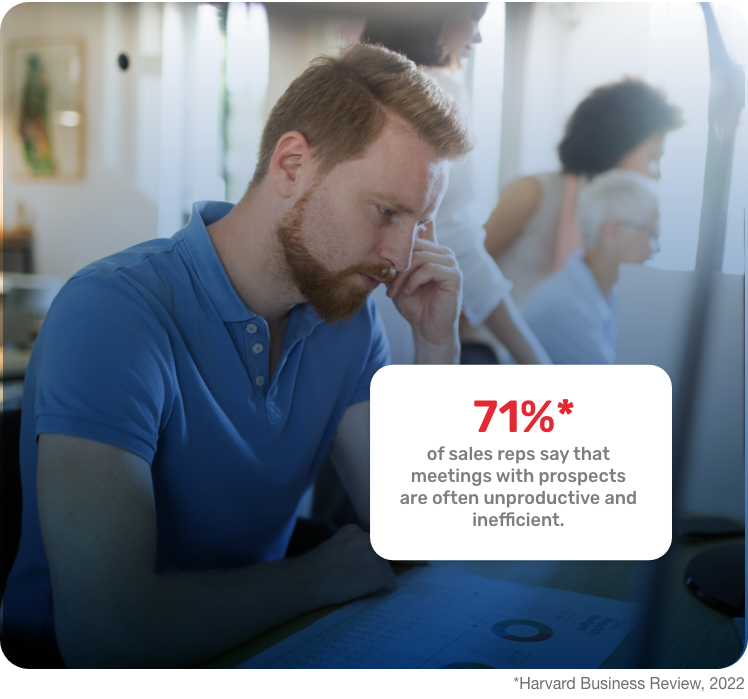
71% of reps run unproductive discovery meetings without a layered BANT diagnostic. Source: Retorio AI Coaching benchmark, 50+ enterprise clients.
It is Tuesday afternoon. Pipeline review. Your head of sales asks three AEs to walk through their top deals. In every single one, the deal is stuck. Procurement has gone quiet. The champion is not responding. The deal "just needs budget approval." When you ask each rep what they know about the buying process, the answer is nearly identical: "They said they have budget, they said the VP is the decision-maker, they need it by Q3." Three deals. Three identical one-sentence summaries. Three reps who ran a checklist and called it qualification.
That is the BANT problem, and it has nothing to do with the framework. It has to do with how reps have been taught to use it. Budget, Authority, Need, Timeline. Four pillars designed at IBM in the 1950s as a structured qualification approach. They still work in 2026, provided a rep treats each pillar as the opening move in a diagnostic conversation, not a box to tick.
This guide gives you the specific discovery questions that turn BANT from a gate into a conversation. It addresses the Authority breakdown that kills most enterprise deals. And it shows how BANT fluency connects to coachable behavior under pressure.
What the BANT Framework Actually Is
BANT is a qualification framework, not a sales script. It tells you whether a prospect is worth pursuing and, more usefully, which constraints stand between an interested conversation and a closed deal. The four pillars are:
Not "do they have money?" but "has this initiative been funded, and if not, where does the investment logic come from?" The budget conversation also reveals who actually controls budget decisions, which is often a different person than the one running the meeting.
In 2026 B2B enterprise deals, authority is not a single person. It is a buying committee. The rep needs to map who approves, who influences, who can block, and who holds the budget release. Confirming "the VP is the decision-maker" is almost always incomplete.
The need conversation has two layers: what the prospect says the problem is, and what the problem costs them if they don't fix it. The second layer is what creates urgency. Many reps stop at layer one and wonder why deals drift.
Timeline is not the prospect's hoped-for go-live date. It is what would have to happen for a decision to land by a given date. Understanding the approval chain, procurement process, and internal review windows tells you more than "they said Q3."
The framework qualifies deals in that sequence for a reason: Budget and Authority are commercial constraints, Need and Timeline are urgency drivers. A deal with strong Need and Timeline but no Budget or Authority identified is a discovery call in progress, not a qualified opportunity.
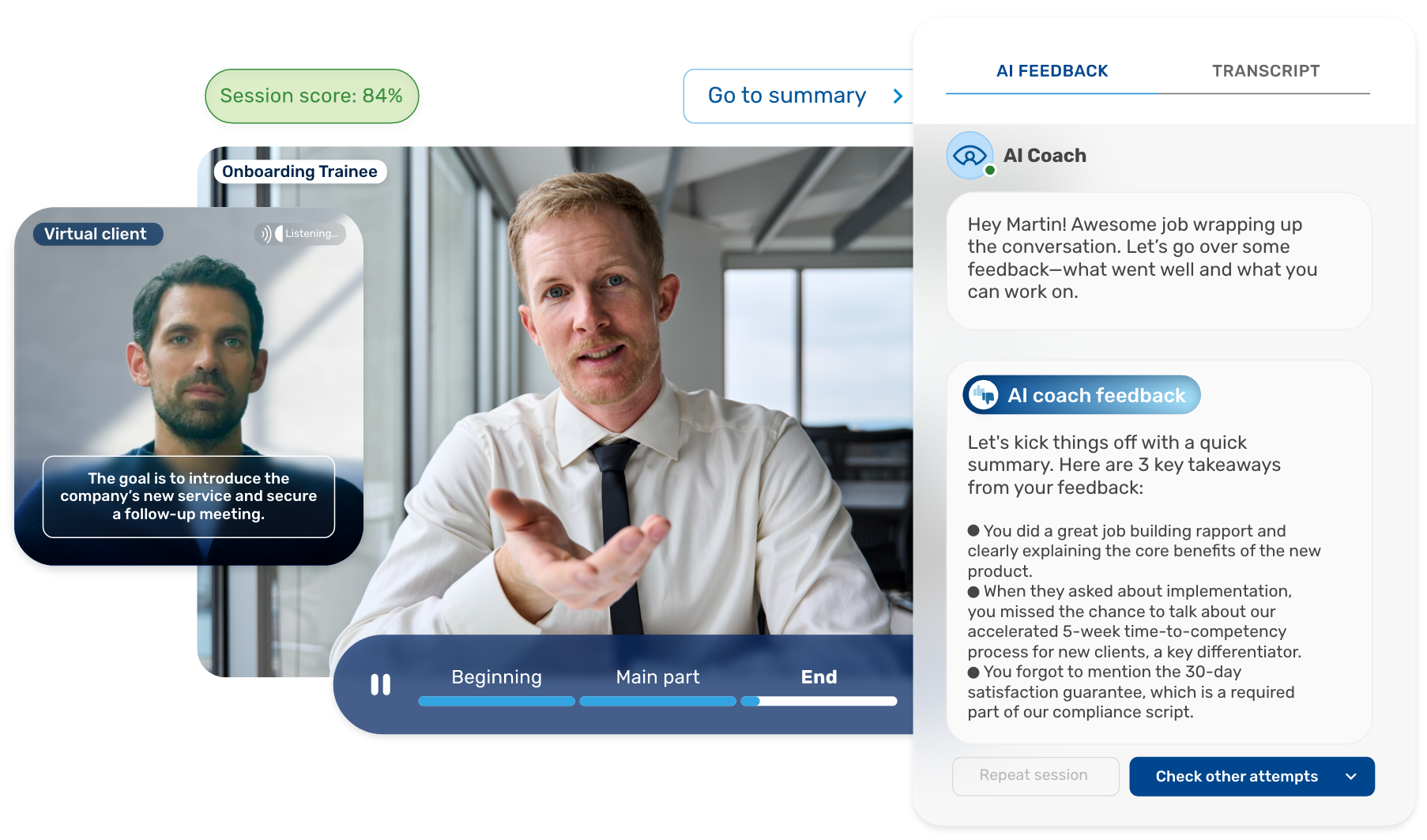
The Discovery Questions That Make BANT Work
Here are the 3-4 specific questions per pillar that diagnostic BANT conversations require. These are not openers. They are the follow-up layer that most reps skip because they think the first answer is sufficient.
Budget: from confirmation to investment logic
Has this initiative been budgeted, or are we building the business case together?
The most important Budget question is whether capital already exists or whether you are helping create the case for it. A rep who does not know which mode they are in will pitch features to someone who needs ROI analysis.
Listen for: Approved headcount versus "we're exploring." Budget line item versus "it would come from the IT refresh."
What would a realistic investment look like for a problem of this scope?
This question surfaces budget range without asking directly. The prospect's answer tells you whether they have thought seriously about cost, or whether they are in early exploration mode without a clear financial picture.
Listen for: A specific number range, reference to a similar past purchase, or a deflection ("We'd need to see the proposal first").
Who controls the release of budget for something like this?
This question bridges Budget into Authority. The person who controls budget release is often not the person who runs the evaluation. Identifying this person early determines whether your champion can actually move the deal.
Listen for: A different name from the primary contact, a committee ("Finance plus the CRO"), or uncertainty ("I think it goes to the CFO").
If this project doesn't get funded this cycle, what happens to the problem?
This question reveals whether the budget discussion has internal urgency behind it. A prospect who says "we push it to Q1" has very different urgency than one who says "we have a board commitment to fix this by year-end."
Listen for: Consequences of delay, alternative investments, or existing workarounds the team would keep using.
Authority: mapping the committee, not the champion
Authority is where BANT breaks down in most enterprise deals. A buying committee of 6-10 stakeholders is now standard in B2B enterprise purchases, according to Gartner's B2B buying journey research. A rep who confirms one decision-maker and moves to next steps has not completed Authority discovery. They have confirmed the first contact.
DEAL WIN RATE BY BANT QUALIFICATION DEPTH
Source: Retorio enterprise customer studies, win-rate patterns across enterprise deployments in enterprise B2B sales, 2024-2026. "Coached diagnostic" = reps who completed structured BANT discovery practice against multi-stakeholder scenarios before live deal involvement.
Need: the two-layer conversation
The Need pillar is where reps most often stop one question too early. A prospect who says "we need better onboarding for new reps" has told you the surface problem. What they have not told you is what that problem costs them, who feels it most acutely, and what they have already tried. Those three layers are what convert Need from a label into a business case.
Watch: the part of leading nobody rehearses
Qualifying well means asking the uncomfortable question early. Simon Sinek on the hardest part of leading, published March 2026.
Source: Simon Sinek (YouTube), March 2026.
Timeline: mechanics over dates
Why Does BANT Fail? The Checklist vs. Diagnostic Distinction
BANT does not fail because the framework is outdated. It fails because reps run it as a four-question gate instead of a structured diagnostic. The difference shows up in specific behaviors.
The BANT framework does not fail deals. Reps who treat four diagnostic pillars as four yes/no gates fail deals. The questions that follow the first answer are where qualification actually happens.
Retorio Sales Team, enterprise customer studies 2024-2026The Authority Breakdown in 2026 Enterprise Deals
The Authority pillar has changed more than any other BANT component over the past decade. Here is what that shift looks like in practice. For deeper context, see sales framework.
The VP Sales or CRO had procurement authority. Your champion confirmed access and you ran the evaluation. One signature closed the deal. One objection from one person could kill it.
BANT's Authority check was a single question: "Are you the decision-maker?" If yes, proceed. If no, get to the person who was.
Enterprise deals involve a committee of 6-10 people with different agendas. Your champion can be enthusiastic and genuinely influential but still unable to get budget approved without three other sign-offs. The Authority conversation now requires mapping this committee explicitly.
BANT's Authority pillar now requires 3-4 questions and typically surfaces 2-3 names your champion had not yet introduced you to.
The implication for how reps are coached on sales methodology is significant. A rep who was briefed on single-decision-maker BANT and has never practiced a multi-stakeholder Authority conversation in a realistic scenario will default to the confirmation model under pressure. That is not a knowledge gap. It is a behavior gap. And behavior gaps close through deliberate practice, not one-time briefings.
BANT vs. MEDDIC: When to Use Each
BANT and MEDDIC both qualify opportunities, but they operate at different depths and for different deal types. For a full breakdown of MEDDIC's methodology, this guide covers MEDDIC's six pillars in detail. The choice between frameworks comes down to deal complexity and sales cycle length.
For most enterprise B2B sales teams, BANT is the right entry point. It builds the diagnostic conversation habit. MEDDIC is the right progression for reps who are already strong at BANT discovery but need more rigor at the late stage, specifically around Economic Buyer access and decision criteria mapping. Understanding the difference between live call coaching and AI role play practice also matters here: BANT fluency builds through practice volume, not observation.
What Gets in the Way: Four BANT Failure Modes to Eliminate
BANT Fluency Is a Coachable Behavior
BANT is not a personality trait. Reps who consistently run deep diagnostic discovery are not more naturally curious or more gifted at conversation. They have built the specific behavioral habits that make BANT work, and those habits were shaped through deliberate practice, not one-time briefings on the framework.
Research on B2B sales performance published in the Harvard Business Review shows that top-performing salespeople differentiate themselves not by asking more questions, but by asking the right questions in the right sequence to build a picture of the customer's business before proposing a solution. That is precisely what structured BANT diagnostic practice produces.
The behaviors that BANT fluency requires, including following the first answer with a second question, mapping the buying committee without prompting, testing timeline urgency instead of accepting stated dates, and surfacing the cost of inaction instead of the surface symptom, are all observable, measurable, and directly coachable, the same way objection handling behaviors are.
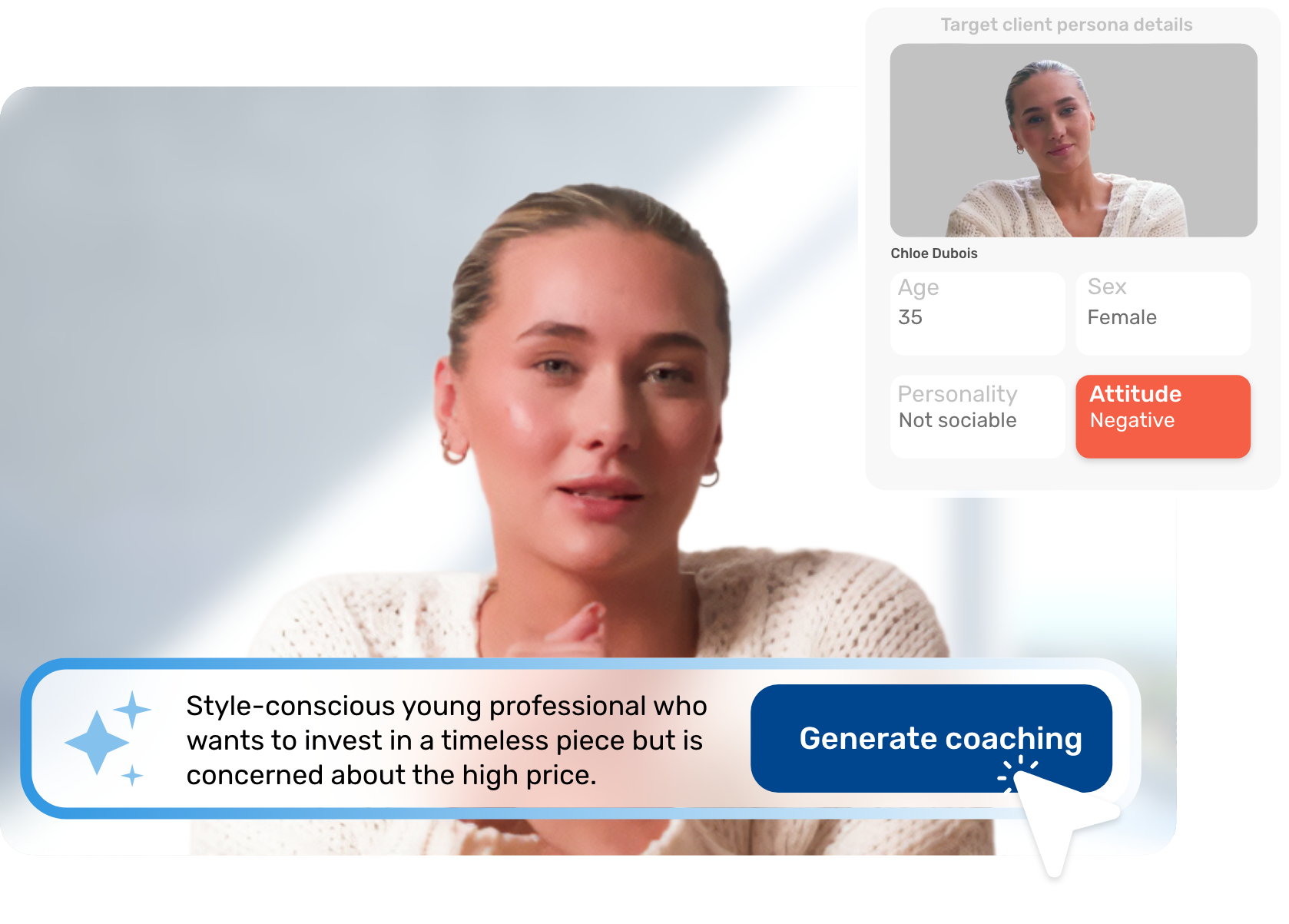
THE BANT COACHING LOOP
Observe
Map current discovery behaviors.
Practice
Repeat layered BANT discovery under pressure. Multi-stakeholder virtual scenarios.
Score
Measure specific behaviors: follow-up question rate, committee-mapping completion rate.
The BANT coaching loop runs in 2-3 week cycles. Each cycle targets one specific behavior gap (e.g., Budget-before-Need sequencing or Authority committee mapping) and measures change via observed discovery behaviors, not manager opinion. Source: Retorio coaching deployment methodology, 2024-2026.
across enterprise deployments coached in Retorio's platform, the documented ramp-time reduction for reps who completed structured discovery coaching before live deal involvement is 38-42%. The mechanism is not motivation or attitude adjustment. It is behavioral: the rep who has practiced the Budget-to-Authority sequencing against a realistic multi-stakeholder virtual customer 12 times before their first enterprise call has different muscle memory than the rep who read the playbook once.
The same principle applies to teams who have already tried coaching once and found it did not stick. The main reason coaching fails is frequency: a single role-play session changes nothing. The coaching loop described above, practiced until the behavior is automatic, is what changes deal outcomes.
Conclusion
BANT is not a relic. It is a qualification framework that still maps accurately onto how B2B enterprise deals actually work: whether a prospect has the financial structure, the decision-making architecture, a real business problem, and a timeline with actual mechanics behind it. What has changed is not the framework but the complexity it must diagnose.
Authority is now a committee, not a person. Need requires uncovering the cost of inaction, not just confirming the problem. Timeline requires testing urgency mechanics, not accepting stated dates. Budget requires mapping who controls release, not just confirming that money exists somewhere in the organization. Each pillar now demands a multi-question diagnostic sequence that most reps were never coached to run.
The gap is behavioral, not intellectual. Reps who run deep BANT discovery have built specific habits through deliberate practice. Reps who run surface-level BANT were briefed on the framework and sent into deals. The distance between those two outcomes is the coaching gap that drives the +14.6% quota achievement difference documented across Retorio's deployment data.
See BANT discovery coaching in your own rep population.
A 30-minute walkthrough on how Retorio diagnoses discovery behavior gaps, which BANT pillars your reps treat as checklists, and what a coaching loop looks like in practice for your deal size and sales cycle.
Test AI coach in actionFrequently Asked Questions
What does BANT stand for in sales?
BANT stands for Budget, Authority, Need, and Timeline. Developed at IBM in the 1950s as a qualification framework, BANT helps sales reps assess whether a prospect is worth pursuing. In modern B2B sales, BANT is most effective when treated as a diagnostic conversation guide, not a binary checklist. Each pillar requires 2-3 layered discovery questions, not a single yes-or-no inquiry.
Is the BANT framework still relevant in 2026?
Yes. BANT remains relevant in 2026, but the framework has been misapplied as a checklist rather than a diagnostic. The biggest adaptation needed is in the Authority pillar: in enterprise B2B deals, authority is rarely held by one person. A buying committee of 6-10 stakeholders is now standard, and BANT discovery needs to map that committee, not confirm a single decision-maker.
What are good BANT discovery questions?
Effective BANT discovery questions are layered. For Budget: "Has this initiative been budgeted, or are we building the business case together?" and "What would a realistic investment look like for a problem of this scope?" For Authority: "Who else needs to be part of the decision?" and "How did you buy something similar last time?" For Need: "What happens if this problem is not solved by Q3?" For Timeline: "What would need to be true for you to move by [date]?"
How does BANT differ from MEDDIC?
BANT and MEDDIC address qualification from different angles. BANT is a conversational framework focused on commercial feasibility: does this deal have the budget, authority, need, and timeline to close? MEDDIC adds deeper layers around Metrics, Economic Buyer, Decision Criteria, Decision Process, Identify Pain, and Champion. For early-stage discovery, BANT works well. For complex enterprise deals with long sales cycles, MEDDIC's process mapping adds rigor.
Can BANT discovery be coached?
Yes. BANT fluency is a coachable behavior, not a personality trait. Reps who struggle with BANT typically rush Budget before establishing Need, or treat Authority as a single-person check instead of a committee-mapping exercise. AI coaching with deliberate practice against realistic scenarios, especially multi-stakeholder buying groups, builds the specific diagnostic habits BANT requires. Retorio customers who run BANT coaching programs measure a +14.6% increase in quota achievement across enterprise deployments.
Written with help from LLMs, edited and checked by Önder Mutluer, Website Manager and Marketing Strategist, and Dr. Patrick Oehler, Co-founder and Co-CEO. Reviewed by Peter Holdenried, Head of Sales. How this article was researched, written and checked, and who reviews which topic: Retorio editorial policy.