


The strongest signal of how someone will perform under pressure rarely comes from a resume or a single interview. A behavioral intelligence test replaces that guesswork with structured, scenario-based evidence of how a person actually thinks, decides, and communicates when it counts.
A behavioral intelligence test = a structured, scenario-based assessment that measures how someone actually thinks, decides, and behaves under realistic pressure, not a self-reported personality quiz. It combines cognitive-ability tasks, decision-making scenarios, and interpersonal-skill measures, such as empathy, adaptability, and communication, into one evidence-based profile employers can act on.
Example. A sales manager comparing two finalists for an account executive role gives both the same live negotiation scenario. One stays calm and asks clarifying questions; the other gets defensive. A behavioral intelligence test turns that difference into a documented, comparable score instead of a hunch.
Last reviewed: July 2026
In this guide, we cover what a behavioral intelligence test measures, real examples, which companies use them, and how to read the results.
What's in this post?
What is a behavioral intelligence test?
A behavioral intelligence test is a structured assessment organizations use to evaluate a person's analytical thinking and decision-making under pressure. These tests assess abilities such as problem-solving, critical thinking, and decision-making, and they measure personality traits like assertiveness, adaptability, and empathy. By gaining insight into a workforce's current skill set, organizations can tailor coaching and hiring decisions to what the evidence actually shows, not what a resume claims.
What is behavioral intelligence?
Behavioral Intelligence is a person's capacity to reason clearly, make informed decisions, and solve problems under real conditions. It draws on cognitive skills such as critical thinking and problem-solving, alongside interpersonal traits like emotional intelligence, assertiveness, and empathy. At Retorio, this pillar sits alongside the Warmth and Competence framework: the two dimensions people instinctively judge each other on in any interaction, from a sales call to a job interview.
You can read a deeper breakdown of what behavioral intelligence is here.
Examples of behavioral intelligence tests
Organizations rely on behavioral intelligence tests to evaluate cognitive capability and problem-solving aptitude in a way a resume or unstructured interview cannot. These assessments cover thinking style, decision-making, and problem-solving, and they also weigh personality traits such as assertiveness and empathy.
Widely used examples include the Hogan Personality Inventory (HPI), the Cognitive Ability Test, the Watson-Glaser Critical Thinking Appraisal, and the Emotional Quotient (EQ) test. This lines up with Harvard Business Review's research on decision-making: structured, evidence-based methods consistently outperform gut-feel judgment.
Which companies are using behavioral intelligence tests?
Behavioral interview questions for HR professionals
Question 1: "What do you consider your biggest strengths and weaknesses when it comes to problem-solving?" (Tip: listen for how the candidate approaches problems, their self-awareness of areas to improve, and any strategies already in place.)
Question 2: "Describe a time you had to make an important decision within a limited time frame. How did you approach it?" (Tip: assess their ability to think quickly and use logic and communication under pressure.)
Question 3: "Tell me about a challenge you faced on a team project and how it was resolved." (Tip: evaluate interpersonal communication and emotional intelligence by listening for empathy, active listening, and conflict resolution.)
Question 4: "If two options each require a different solution but only one can be chosen, what is your criteria for deciding?" (Tip: analyze whether they can weigh pros and cons logically and land on a feasible solution while accounting for consequences.)
What is a behavioral intelligence test appraisal?
A behavioral intelligence test appraisal is how organizations commonly evaluate a person's decision-making capacity and emotional intelligence together. These appraisals gauge the ability to think clearly, decide quickly under pressure, and communicate effectively as part of a team, the same behavioral signals Stanford Graduate School of Business research on leadership behavior ties directly to performance outcomes.
Behavioral intelligence tests often include problem-solving activities where candidates weigh the pros and cons of different solutions before deciding, alongside emotionally charged scenarios that assess empathy and self-awareness.
These appraisals frequently form part of recruitment, helping identify candidates with the skills a role requires. They also surface an employee's strengths and gaps in thinking style, agility, and communication, which then shapes individual coaching plans.
How is a behavioral intelligence test measured?
Behavioral intelligence tests typically combine multiple-choice questions, role-play scenarios, and word puzzles. Multiple-choice questions cover logic, analysis, problem-solving, and communication. Role-play scenarios present candidates with realistic situations and observe how they respond, gauging empathy and self-awareness through how someone behaves under pressure rather than how they describe themselves. Word puzzles test riddles or analogies that reveal thinking style.
See how AI role play turns behavioral signals into coaching your team can act on.
Test AI coach in actionBenefits of behavioral intelligence tests
| Assess cognitive abilities | Behavioral intelligence tests measure a person's ability to think analytically and decide quickly under pressure. |
| Identify job candidates | These tests are used in recruitment to identify candidates who have the skills a specific job role needs. |
| Shape coaching plans | Behavioral intelligence tests help build individual coaching plans by surfacing an employee's strengths and gaps in thinking style, mental agility, and communication. |
| Improve team dynamics | Behavioral intelligence tests show how people communicate and interact with others, which is valuable context for how a team or group works together. |
In summary, behavioral intelligence tests are structured assessments organizations use to evaluate analytical thinking and decision-making. They assess skills such as problem-solving and critical thinking, alongside personality traits such as emotional intelligence, assertiveness, flexibility, and empathy.
With guidance from coaching experts, a behavioral intelligence test gives organizations real insight into a workforce's current skill set, insight that can shape coaching plans within realistic budget constraints. With this guide, you now have what you need to understand the purpose of behavioral intelligence tests, how they function, and how to bring them into your organization. For a related angle on the science, see how AI role play now delivers many of the same behavioral signals, live and at scale, inside AI sales coaching programs.
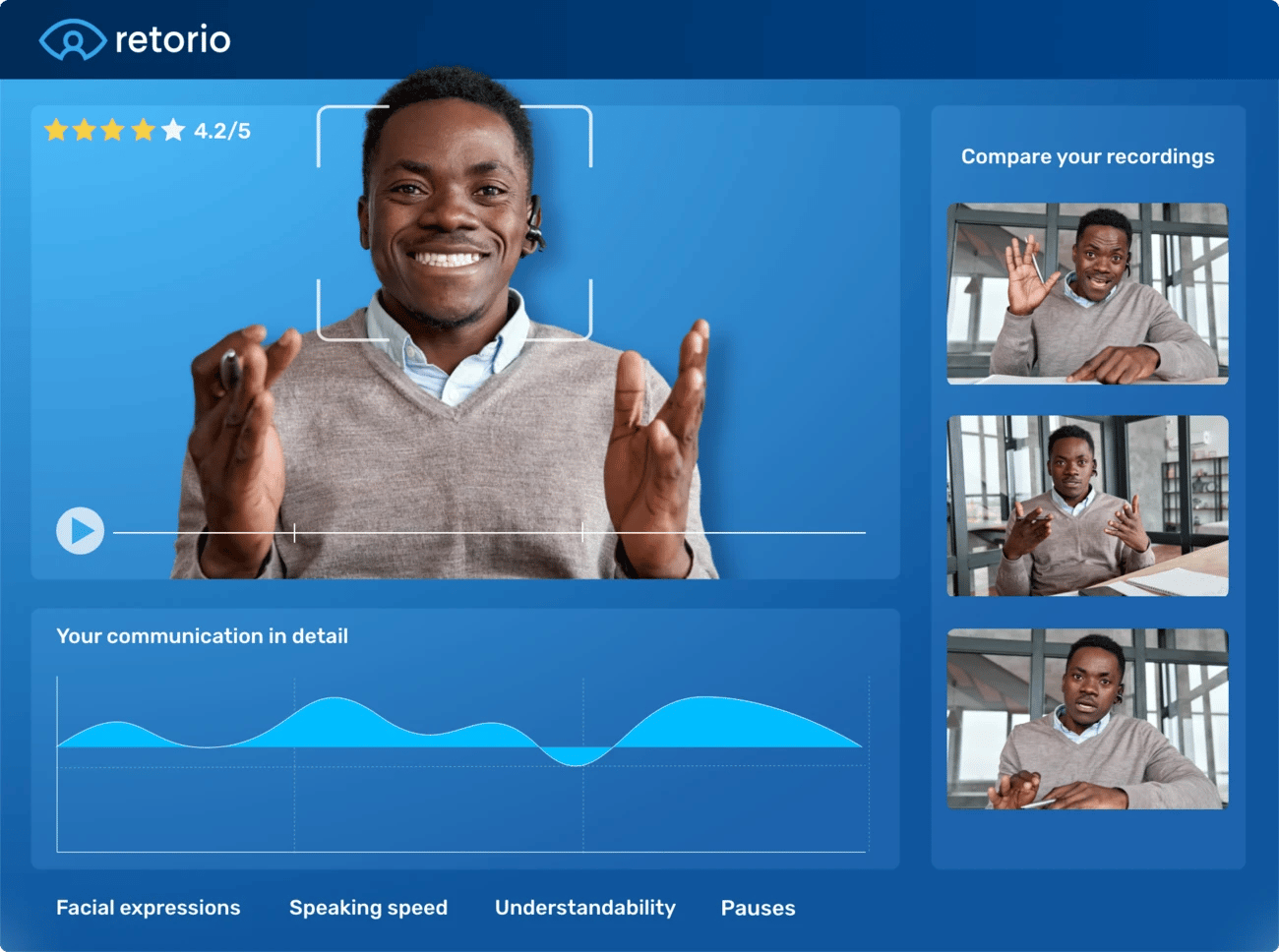
Retorio's AI Coaching Platform builds on the same behavioral intelligence principles: it evaluates abilities such as problem-solving, critical thinking, and decision-making alongside traits like assertiveness, flexibility, and empathy, then turns that evidence into coaching your team can act on immediately, not months later in a review cycle.
See what a behavioral intelligence signal looks like inside a real coaching session.
Watch how Retorio turns a role play into a documented behavioral profile in minutes.
Test AI coach in actionKey Takeaways
FAQ
1. What is an example of behavioral intelligence?
Behavioral intelligence is the capacity to use cognitive, interpersonal, and problem-solving skills in decision-making, analyzing a situation from multiple angles and choosing what best aligns with a person's goals. Examples include analytical thinking, emotional intelligence, creativity, problem-solving, decision-making, and effective communication. Employers use behavioral intelligence tests to assess this capacity directly.
These tests evaluate problem-solving alongside traits like adaptability and empathy, giving insight into how employees approach tasks emotionally and behaviorally. By assessing an employee's existing skill set through a behavioral intelligence test, companies can tailor coaching for measurable results.
2. What is behavioral intelligence?
Behavioral intelligence is the ability to use cognitive, problem-solving, and interpersonal skills to make decisions. It involves analyzing a situation from multiple perspectives and deciding what best aligns with a person's goals.
3. What are some examples of behavioral skills?
Critical thinking, problem-solving, emotional intelligence, creativity, flexibility, assertiveness, and empathy are common examples of behavioral skills in everyday work.
4. What are the 4 types of emotional intelligence?
Emotional intelligence is generally grouped into four segments: self-awareness, self-regulation, social skills, and empathy.
Self-awareness is the ability to recognize and understand your own emotions and reactions, which helps identify areas for growth. Self-regulation is managing emotions well enough to keep deciding clearly under pressure. Social skills cover communication, collaboration, negotiation, and conflict resolution. Empathy is the capacity to understand what someone else is feeling without having lived the same situation yourself.
5. How long does a behavioral intelligence test take?
Most behavioral intelligence tests take between 20 and 45 minutes, depending on whether they combine multiple-choice questions, role-play scenarios, and written responses. Scenario-based formats, including AI role play, typically run shorter individual sessions repeated over time, which gives a more current read on behavior than a single one-off test.
Written with help from LLMs, edited and checked by Önder Mutluer, Website Manager and Marketing Strategist, and Dr. Patrick Oehler, Co-founder and Co-CEO. Reviewed by Dr. Florian Abicht, Chief AI Officer. How this article was researched, written and checked, and who reviews which topic: Retorio editorial policy.