


Every "best AI role-play platform" list you have opened this quarter was written by one of the vendors on it. So was this one. The difference is that this comparison is built to be checked: Mindtickle, Second Nature, Hyperbound, and Retorio on six criteria you can verify on the vendors' own sites, and each of the four wins at least one row.

Ask three enablement leads which AI role-play platforms are on the shortlist and you will hear the same four names: Mindtickle, Second Nature, Hyperbound, and Retorio. Then ask what each one actually measures, and the answers stop matching. Each is built around a different bet: content-and-certification breadth, scenario volume, real-call reinforcement, or behavioral scoring. The marketing pages make all four sound like the same product. They are not. What follows compares them side by side on six criteria you can check yourself: role-play depth, behavioral scoring, language coverage, EU data residency, pricing model, and ideal buyer. For the mechanics behind the category itself, see our full breakdown of AI role-play for sales teams. No platform wins every row.
The four platforms enterprise teams shortlist for AI sales role-play in 2026 are Mindtickle, Second Nature, Hyperbound, and Retorio. Mindtickle bundles role-play inside a broader content-and-certification suite. Second Nature publishes the widest language count (30+) for scenario practice. Hyperbound focuses on cold-call and real-call reinforcement scoring. Retorio pairs role-play with a published behavioral score across 140+ cues and EU-hosted compliance documentation. The right choice depends on which of these six criteria your team weighs most, not on a single overall ranking.
Example. A Head of Commercial Excellence at a European insurer needs a 400-agent rollout that clears legal review before procurement will sign. EU data residency and a documented behavioral score matter more to that buyer than the widest language list, so the row that wins for them is not the row that would win for a US-only SDR team choosing on cold-call volume alone.
Who Buyers Actually Shortlist in 2026
On the surface all four do the same thing. A rep talks to a simulated buyer before facing a real one. Underneath, each was built to optimize for something different, and that difference is what you are actually choosing between.
An enablement suite where AI role-play is one module among content management, certification, and coaching workflows. Built for revenue teams that want one platform rather than a point solution.
An AI role-play platform built around repeatable conversation practice at scale, with the widest publicly stated language count in this comparison. Used by Fortune 100 case studies referenced on its own site.
An AI buyer role-play platform built for cold-call practice, certification, and a reinforcement loop that also scores real sales calls against a rubric. Built for SDR-heavy revenue organizations.
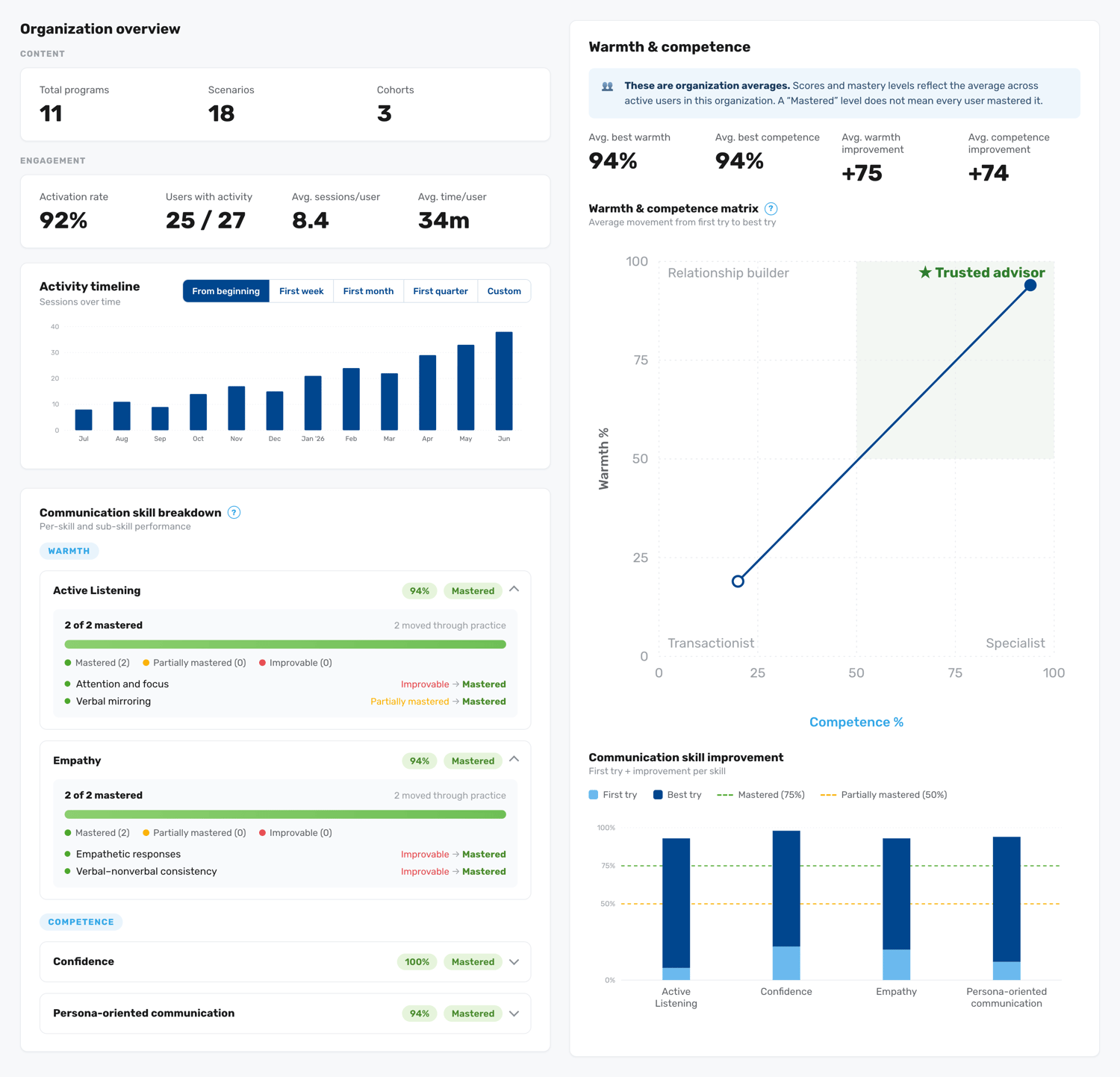
An AI coaching platform where role-play is paired with a Warmth × Competence behavioral score across 140+ cues, built for enterprise teams that need EU-hosted compliance documentation alongside the practice itself.
Six Criteria That Actually Separate These Platforms
Read four feature lists back to back and all four vendors sound complete. That is what feature lists are for. The six criteria below are the ones you can verify yourself, on the vendor's own site, before anyone signs anything.
The category is wide. The criteria narrow it. The row that matters is specific to what your team needs to defend at procurement.
AI Sales Role-Play Platforms Compared
Every cell below reflects what the vendor publishes on its own site as of 2026. Where a public page does not state a capability, the cell says so instead of guessing. None of the competitor figures come from a competitor's internal data or case study, which is our editorial policy. The Retorio row comes from Retorio's own product documentation and pricing page, and you should read it with that in mind.
| Platform | Role-play depth | Behavioral scoring | Language coverage | EU data residency | Pricing model |
|---|---|---|---|---|---|
| Mindtickle | AI role-play module inside a broader enablement suite (content, certification, coaching) | Verify with vendor not detailed on public pages | Verify with vendor not stated publicly | Verify with vendor not stated publicly | Not published, contact sales |
| Second Nature | Configurable role-play and coaching scenarios, personalized or template-based | Partial real-time and analytics-based feedback, scoring rubric not published in detail | 30+ languages (self-stated) | Verify with vendor not stated publicly | Not published, contact sales |
| Hyperbound | AI buyer role-play plus real-call reinforcement, scenarios built from historical deals and top performers | Partial rubric-based call scoring (e.g. MEDDPICC-style checkpoints), full methodology not published | Verify with vendor not stated publicly | Verify with vendor not stated publicly | Not published, contact sales |
| Retorio | 93 avatars, 38 voices, industry-specific scenarios (pharma, insurance, telecom, automotive) | Yes Warmth × Competence score across 140+ behavioral cues | 14 languages | Yes ISO 27001, GDPR, EU AI Act aligned, GCP EU hosting | Published per-user pricing, monthly or annual, on Retorio's own pricing page |
Do not count the affirmative cells. Read the one row that decides your evaluation. If your rollout lives or dies on the number of languages, the answer above is unambiguous. If it lives or dies on whether legal will approve EU hosting, the answer is a different one, and it is just as unambiguous. Neither of those is the category's answer. It is yours.
Language Coverage, Compared Honestly
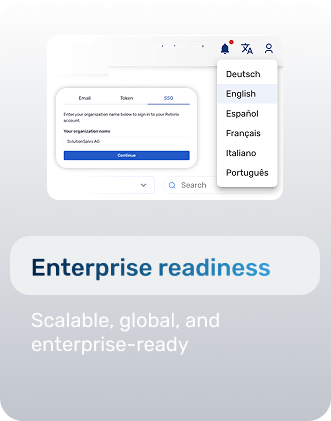
Second Nature states "30+ Languages" on its own homepage and does not name them. Retorio publishes the list: English, German, French, Italian, Spanish, Portuguese, Bulgarian, Czech, Dutch, Greek, Korean, Russian, Turkish, and Polish. Fourteen, all named. Mindtickle and Hyperbound publish no count at all, so the honest entry for those two rows is a question for the vendor during evaluation. On this one criterion Second Nature's published number is the larger one. Whether a larger unnamed number beats a shorter named one depends entirely on whether the languages your rollout actually needs are on the list.
Publicly stated language coverage
Choose This If: A Fit Guide for Each Platform
None of these four is a wrong choice. Each is the right one for a particular priority, and the fastest way to shortlist is to find the sentence below that sounds like your own situation.
You want one platform for content management, certification, and coaching workflows, with role-play as one module inside that suite rather than a dedicated behavioral-scoring layer.
Your primary requirement is the widest published language count for scenario practice across a large, distributed team, and EU hosting documentation is not a blocking requirement.
Your team is SDR-heavy and cold-call volume is the behavior you need reinforced, with a rubric-based scoring layer that also reviews real calls, not just practice sessions.
You need a published behavioral score across warmth and competence signals, EU data residency and compliance documentation available before procurement asks for it, and per-user pricing published without a sales call.
Previously, practicing a scenario with a manager took 3 to 5 hours. Now our agents run an AI role play 5 times for each scenario independently.
Ivo Nikolov, Business Analyst at Vodafone
How to Run Your Own Comparison in Five Steps
The six criteria are a starting point, not a replacement for your own evaluation. For a longer, step-by-step version, see our full guide on how to evaluate AI sales role-play software. What follows is the short version, the five things worth doing before anyone signs.
Role-play depth, behavioral scoring, language coverage, EU data residency, pricing model, and ideal buyer fit will not matter equally to every buyer. Rank them before requesting a single demo.
Test: write the ranked list down before the first vendor call, so a strong demo cannot reorder your own priorities.
A demo conversation says nothing about whether the underlying feedback is specific enough to change behavior. Ask to see a scored session, not a summary slide.
Test: after the session, can a rep name the one specific behavior to fix next? If the feedback is a single number, the answer is usually no.
If EU data residency, GDPR, or EU AI Act alignment matters for your workforce, ask for the certification documents during evaluation, not after the contract is signed.
Test: if a vendor cannot produce the documentation within the evaluation window, treat that as an answer.
Only one of the four platforms in this comparison publishes pricing on its own site. For the other three, request a written quote at your actual seat count before comparing total cost.
Test: ask what happens to price per seat at 2x your current headcount, not just at today's count.
Run the pilot against the criteria you ranked in step one. A vendor's demo is built to show its own strengths; your pilot should test the criteria that matter to your team specifically.
Test: six weeks in, revisit your step-one ranking. If the winning platform only wins on criteria you ranked low, reconsider.
Source: Retorio. A short walkthrough of the criteria worth checking before standardizing on any sales coaching or role-play platform.
Four Mistakes When Reading a Vendor Comparison Table
Conclusion
Four platforms, four different bets on what an AI sales role-play platform should optimize for: enablement-suite breadth, scenario volume across languages, cold-call reinforcement, or a documented behavioral score with EU compliance built in. None of the six criteria favors all four at once, and none should. The comparison that survives procurement is the one where you ranked your own criteria before you opened the table. Rank first, then read. For the broader category these four platforms sit inside, see our sales coaching software buyer's guide.
Run one sales scenario through Retorio's Warmth × Competence scoring and see the specific feedback it gives a rep, plus the compliance documentation available before your first sales call. It takes a few minutes.
Key Takeaways
FAQ
What is the best AI sales role-play platform for enterprise teams?
It depends on which criterion matters most to your team: enablement-suite breadth, published language coverage, cold-call reinforcement, or a documented behavioral score with EU compliance. Mindtickle, Second Nature, Hyperbound, and Retorio each lead on a different one of those, compared criterion by criterion above.
Is Second Nature or Retorio better for AI sales role-play?
Second Nature publishes the wider language count for scenario practice, 30+ self-stated versus Retorio's named list of 14. Retorio publishes a graded behavioral score across 140+ cues and EU data residency documentation, which Second Nature's public pages do not state. Which is "better" depends on whether language breadth or documented behavioral scoring and EU compliance matters more to your rollout.
Does any AI sales role-play platform publish EU data residency?
Among the four platforms compared here, only Retorio publicly states EU data residency, alongside ISO 27001 certification and EU AI Act alignment, hosted on Google Cloud Platform. Mindtickle, Second Nature, and Hyperbound do not state a hosting region or EU-specific compliance posture on their public pages; confirm directly with the vendor if this is a requirement.
How many languages do AI sales role-play platforms support?
Second Nature states "30+ Languages" on its own site without naming them. Retorio publishes a named list of 14: English, German, French, Italian, Spanish, Portuguese, Bulgarian, Czech, Dutch, Greek, Korean, Russian, Turkish, and Polish. Mindtickle and Hyperbound do not publish a language count on their public pages.
Do AI sales role-play platforms publish their pricing?
Of the four compared here, only Retorio publishes per-user pricing, monthly or annual, on its own pricing page. Mindtickle, Second Nature, and Hyperbound direct visitors to book a demo or contact sales, with pricing not disclosed publicly.
What criteria should a buyer use to compare AI sales role-play platforms?
Six criteria hold up across most enterprise evaluations: role-play depth, behavioral scoring depth, language coverage, EU data residency, pricing transparency, and fit for your team's specific ideal-buyer profile. Rank these for your own team before reading any vendor's comparison table, including this one.
Written with help from LLMs, edited and checked by Önder Mutluer, Website Manager and Marketing Strategist, and Dr. Patrick Oehler, Co-founder and Co-CEO. Reviewed by Peter Holdenried, Head of Sales. How this article was researched, written and checked, and who reviews which topic: Retorio editorial policy.