


Leadership and management training develops the competencies of people in authority, serving two connected goals: equipping leaders to navigate complexity and foster innovation, and preparing managers to oversee execution and implement strategy. The post cites that companies with strong leadership outperform competitors by 4.2 times, and that AI-driven coaching cuts development time by 60% with personalized, real-time practice.
Example. A newly promoted sales manager sees engagement drop after a restructure. Through weekly coaching sessions on conflict resolution and communication, she learns to spot early signs of frustration and address them directly. Within a quarter, retention improves and output stabilizes.
Imagine a workplace where every employee is a high-impact leader, driving innovation, collaboration, and agility. Research shows that companies with strong leadership outperform competitors by 4.2 times (Forbes).
Now, ask yourself: Are your teams thriving in a high-pressure market, or are they battling decision fatigue, miscommunication, and stagnation?
🚀 The Real Advantage: AI-Powered Leadership Coaching
Traditional leadership programs are slow and outdated. AI-driven coaching slashes development time by 60% (Harvard Business Review), delivering personalized, real-time growth that equips teams to lead with confidence.
📉 Struggling with turnover or disengaged employees?
With 75% of workers citing effective leadership as the #1 driver of job satisfaction (GoRemoteLy), investing in leadership development isn’t optional, it’s a must for retention and success.
👉 Can you afford to wait? Dive into this article to uncover 5 powerful benefits of leadership and management training, and see how AI-driven coaching is transforming organizations into market leaders.
What's in this post:
What is leadership and management training?
🚫 The Scenario:
Your leaders are struggling to retain talent. Engagement is dropping. When conflict arises, problem-solving skills are missing.
How do you fix this? Enter: Leadership and Management Training.
At its core, this training is designed to enhance the competencies of individuals in authority. But it serves two distinct, interconnected purposes:
Equips leaders with tools to navigate complexity and foster innovation.
- Improve soft skills & emotional intelligence.
- Guide and motivate team members.
- Make strategic, high-level decisions.
Prepares managers to oversee execution and implement strategy.
- Oversee projects successfully.
- Implement best practices for organizational goals.
- Progress from first-line to senior roles.

Stay ahead of the curve: How can you drive your managers to remain strong leaders?
Discover this year's seven leadership training trends.
Benefits of leadership and management training
After undergoing leadership training, participants encountered a 28% increase in leadership behaviors, a 25% increase in learning, and a 20% improvement in overall job performance.
Investing in leadership and management training is a strategic move that can yield significant benefits for all organizations. The more you invest in the development of your assets (aka your employees), the more advantages your organization will reap.
According to research, businesses that invest in coaching and training programs for their employees, gain an average return on investment (ROI) for every $7 spent on $1 on leadership and management development.
You may also be interested in AI-powered coaching and why you need it now, especially if you are looking to boost your company's engagement rates and increase overall efficiency.
Here are a further seven benefits of leadership and management training.
Enhanced leadership qualities and styles
One thing that companies should prioritize improving in 2024 and beyond is the leadership skills and styles that their leader and managers have.
Organizations are also able to upgrade their leadership skills and styles by providing their leaders with opportunities to acquire new skills and competencies, develop their existing skills to stay ahead of the curve, and gain new perspectives.
How exactly does this benefit companies? Organizations will gain leaders who:
-
Communicate more effectively with their teams, clients, and stakeholders.
-
Motivate and inspire their teams to achieve their goals and strive for more.
-
Build strong relationships with their team members and stakeholders.
-
Know how to nurture top performers, and capitalize on their strengths.
-
Can successfully navigate unexpected and expected changes more efficiently and calmly.
Boosted employee engagement and retention
Having leadership and management training as a core part of your organizational development plan plays a crucial role in reducing your turnover rates, and paving the way for your managers towards a successful management career.
Companies who invest in leadership and management development experience a 42% decrease in turnover.
By equipping your managers with the essential skills and tools to thrive in their positions, organizations will be able to build a positive and supportive work environment where employees feel respected, valued, heard, and empowered to contribute to their full potential.
As a result, training someone to become a good leader will generate higher levels of job satisfaction across the company, more motivation, higher productivity, and a more loyal workforce. After all, if your employees don't like your managers or leader, it can begin to go somewhat downhill from there, and it does only just stem from your leader's personality, but also how they handle different situations and the decisions they lead their team to make.
Ever heard the saying: "People quit their bosses, not their jobs"?
57% of employees have quit their jobs due to being frustrated with their manager or leader.
Increased customer satisfaction and loyalty
A leader or a manager is more or less a strong representative of your company's brand and image. From their behaviors and responses, to how they find solutions for a smooth customer experience, having training that covers all the important practical skills every manager and leader should have is vital to understanding customer needs.
You may also be interested: Top 9 skills in leadership training for managers in 2024.
With that being said, leadership and management training benefits your company by enabling your leaders and managers to deliver exceptional service and build strong relationships with their clients. This not only helps foster long-term trust but also helps your business to gain loyal customers. Related reading on leadership coaching.
Imagine hearing continuously positive feedback from your customers and gaining trust all because your leader and managers know how to do their job well. It all begins with training them exactly where they can improve and mastering it.
Companies with a strong focus on leadership development experience a 22% increase in customer satisfaction and a 15% increase in profitability.
Successfully cultivates future leaders
Leadership and management training benefits organizations in successfully cultivating future leaders by providing them with the important skills, knowledge, and experience to take on leadership roles in the future. This is relevant, especially when it comes to managers.
Through leadership development programs and leadership courses, organizations are better able to identify high-performing and high-potential employees and give them the right training to become the next generation of leaders.
Investing in future leadership ensures that your business has a strong succession plan of talented individuals who will be able to drive organizational growth and success in the future.
Let's dive a little deeper into some of the points:
-
Identifying high-potential individuals: This training provides employees and managers with the opportunity to showcase their leadership skills. Through this process, companies can quickly identify individuals with high leadership potential and nurture their strengths and areas for improvement so they to become strong leaders in the future. Developing emerging leaders with AI expands this point.
-
Providing hands-on experience: This training does not only involve speech. It also includes helping future leaders gain practical experiences that allow them to apply their skills and knowledge to various real-world situations. Individuals become prepared to deal with difficult and easy situations effectively and level up their confidence as upcoming leaders.
-
Creating a strong succession plan/pipeline of future leaders: By investing in leadership and management development, you are creating a secure pipeline of talent and strong leaders to help your business grow and maintain its success in the future. This also plays a role in retaining top performers and having your future leaders know how to nurture new talent in the coming months or years.
Increases emotional intelligence in the workplace
Emotional intelligence is one of the leading soft skills in leadership and management this year, and it will no doubt continue to become more important in the years to come.
Companies that focus on emotional intelligence (EI) are able to create a more positive, productive, and engaging workplace. Leaders and managers who are more emotionally intelligent can better understand and manage their own emotions, including the emotions of others.
Therefore, your company will experience better communication, stronger and more harmonious relationships, and increased collaborations. Additionally, it highlights emotional intelligence in leaders and managers to reduce turnover (once again), resolve conflicts effectively, and have leaders who are motivated and in turn, motivate their teams.
Improved team collaboration and performance
Another major benefit of leadership and management training is being able to witness more collaborations in your company, and seeing performance rates skyrocket. Isn't that a dream? The higher the performance rates, the more clients you can gain, and the more revenue you will achieve.
The training also benefits companies in improving team collaboration and performance by providing leaders with the skills and tools they need to foster a collaborative and high-performing work environment.
Leaders can learn how to effectively communicate, delegate, motivate, and support their teams, leading to increased teamwork, trust, and productivity. Additionally, training can help leaders identify and leverage the strengths of each team member, creating a more balanced and effective team composition. As a result, organizations can enhance their ability to achieve goals, innovate, and adapt to changing market conditions.
Increase in innovation
Leadership and management training unleash innovation within organizations, leading to boosted creativity, smarter problem-solving, and breakthrough ideas.
By equipping leaders with the right tools and skill sets, companies will be able to create a workforce where employees feel empowered to take risks, voice their ideas confidently, encourage their team to do the same, challenge the status quo, and explore new possibilities.
Having leaders who bring innovation into your business, is what will ensure that you will always remain ahead of the curve and hold a strong competitive edge within your industry. What's more - innovative leaders and managers, will form teams that are just as innovative.
A study by Deloitte reveals that companies with high-performing leaders are 30% more likely to achieve their innovation goals.
The 7 Pillars of High-Impact Leadership & Management
Effective leadership is not a singular trait; it is a complex tapestry of interpersonal, strategic, and operational competencies. To build a truly resilient organization, L&D leaders must look beyond the surface.
Expected first-year ROI from AI sales coaching at scale
See it run on your own selling motion, buyer personas, and current coaching gap.
Below is a comprehensive breakdown of the seven non-negotiable skills that drive modern business success, along with actionable strategies to develop them. Executive coaching expands this point.
1. Advanced Communication
The Foundation of TrustCommunication is often cited as a soft skill, but its impact is hard. It is not just about speaking clearly; it is about the transmission of ideas, the alignment of expectations, and the navigation of nuance across digital and physical divides.
- Active Listening: Hearing what isn't said (non-verbal cues).
- Radical Candor: Delivering feedback that is kind but direct.
- Async Mastery: Communicating effectively over Slack/Teams without losing tone.
Poor communication is the #1 cause of project failure. Misaligned teams waste an average of 280 hours per year resolving clarity issues.
2. Strategic Decision-Making
Navigating UncertaintyLeaders are paid to make the hard calls. The ability to make sound decisions with limited information, and stick to them, is what separates executives from managers.
How to Train It: Move leaders away from "gut feeling" and toward frameworks like the Eisenhower Matrix for prioritization or the OODA Loop (Observe, Orient, Decide, Act) for speed.
3. Analytical Problem-Solving
Finding the Root CauseIt’s not enough to fix the symptom; great leaders fix the system. Training must focus on moving leaders from "firefighting" mode (reacting to problems) to "fire prevention" mode (systemic analysis).
- The 5 Whys: A technique to drill down to the root cause of any operational failure.
- Design Thinking: Approaching internal blockers with the same empathy used for customer problems.
- Data Literacy: The ability to read dashboard metrics and understand what is breaking, not just that it is breaking.
4. Emotional Intelligence (EQ)
The Predictor of SuccessEQ is no longer a "nice to have", it is a critical performance indicator. High EQ leaders can regulate their own stress responses while simultaneously reading the emotional temperature of the room.
The ability to remain the "calmest person in the boat" during a crisis. Panic is contagious, but so is calm.
Recognizing burnout in a team member before they hand in their resignation letter.
5. Strategic Delegation
Empowerment over DumpingMany new managers confuse delegation with "task dumping." True delegation is about assigning authority, not just work. It is the art of saying, "I trust you to own this outcome," rather than "Please do this task."
🚀 Growth Hack: Train managers to delegate based on strengths, not just availability. Assigning a task to someone who excels at it builds confidence; assigning it to someone who hates it breeds resentment.
6. Conflict Resolution & Mediation
Turning Friction into FuelConflict is inevitable in high-performing teams. The goal isn't to eliminate it, but to harness it. Healthy conflict drives innovation; unhealthy conflict destroys culture. For deeper context, see the benefits of leadership training.
[Image of Thomas Kilmann conflict mode instrument]Leaders must be trained to move from "Winning the Argument" to "Solving the Problem." This involves mediation techniques that depersonalize the issue and focus on shared goals.
7. Visionary Leadership
The "North Star" AlignmentFinally, managers manage tasks, but leaders manage meaning. If your leaders cannot connect the daily grind to the broader company mission, engagement will plummet.
Visionary leadership is about storytelling. It is the ability to paint a picture of the future so compelling that the team is willing to navigate the difficulties of the present to get there.
Building the Ultimate Leadership & Management Course
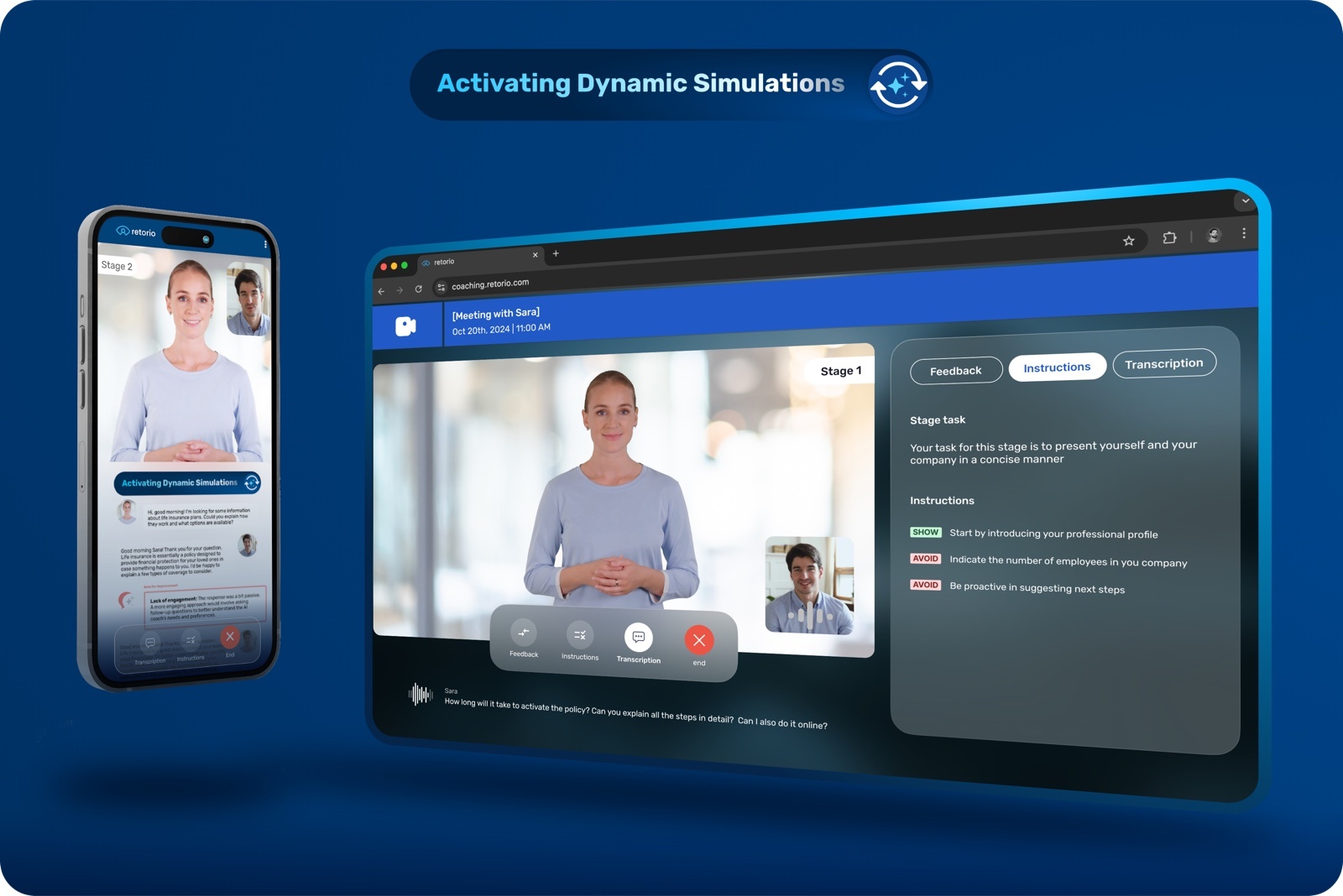
Effective leadership is not an innate skill; it is a muscle that requires continuous refinement. But traditional "one-size-fits-all" seminars are dead. To drive real innovation, your training course must meet three modern criteria:
It must adapt to the unique skill gaps of the individual, not just the general goals of the company.
A judgment-free zone where leaders can fail, learn, and iterate without fear of public embarrassment.
Feedback must be based on objective behavioral data, not subjective opinions.

FAQ: Leadership & Management Training
What is the average cost of leadership and management training?
The average cost of online leadership and management training varies depending on the specific program, provider, and duration.
However, you can expect to pay anywhere from $50 to $2,000 per course. Self-paced courses and introductory programs tend to be more affordable, while more comprehensive and in-depth courses can be more expensive.
For information on Retorio's pricing for our AI-powered coaching platform, go here.
What are the objectives of leadership and training management?
Leadership and management training programs aim to equip individuals with the essential skills and knowledge required to effectively lead and manage teams. These objectives can be broadly categorized into three main areas:
-
Enhancing leadership effectiveness: This involves developing the ability to communicate effectively, inspire and motivate others, make sound decisions, solve problems, and manage change.
-
Improving team performance and collaboration: This encompasses building strong relationships, fostering teamwork, promoting collaboration, and empowering team members to achieve their full potential.
-
Enhancing organizational success and adaptability: This involves contributing to organizational goals, driving innovation, adapting to change, and ensuring the organization's long-term sustainability.
What is leadership and management training?
Leadership and management training is a structured program designed to develop essential skills for leading teams, managing projects, and driving organizational success. It covers areas like communication, decision-making, conflict resolution, and strategic planning.
What are the benefits of leadership and management training?
-
Improved Decision-Making:Equips leaders with tools to make informed, strategic decisions.
-
Enhanced Communication:Builds skills to foster collaboration and resolve conflicts effectively.
-
Increased Employee Engagement:Empowers leaders to inspire and motivate their teams.
-
Better Productivity:Streamlines processes and improves team efficiency.
-
Career Advancement:Prepares individuals for higher-level roles and responsibilities.
How does leadership training differ from management training?
Leadership training focuses on inspiring and guiding teams toward a shared vision, while management training emphasizes organizing, planning, and executing tasks to achieve specific goals. Both are complementary and essential for organizational success.
Are there AI-powered leadership courses?
Yes, platforms like Retorio offer AI-driven leadership training that uses behavioral intelligence to provide personalized feedback and simulations. These courses are ideal for developing real-world leadership skills.
What is the value of a leadership certificate?
A leadership certificate demonstrates your commitment to professional growth and equips you with practical skills to lead effectively. It can enhance your resume, open doors to promotions, and increase your earning potential.
How do I choose the right leadership training program?
Consider factors like your career goals, budget, and preferred learning format (online vs. in-person). Look for programs with strong reputations, such as those offered by Harvard, Wharton, or AI-driven platforms like Retorio.
What are the key skills covered in leadership training?
-
Emotional intelligence
-
Strategic thinking
-
Conflict resolution
-
Communication and collaboration
-
Decision-making and problem-solving
Written with help from LLMs, edited and checked by Önder Mutluer, Website Manager and Marketing Strategist, and Dr. Patrick Oehler, Co-founder and Co-CEO. How this article was researched, written and checked, and who reviews which topic: Retorio editorial policy.