


Most enterprise sales teams are not failing on AI adoption. They are failing on AI selection. They have the tools. They are solving the wrong problems with them. Here is the 10-category framework for which AI tools your sales org actually needs in 2026, and which categories are noise for your specific stage.
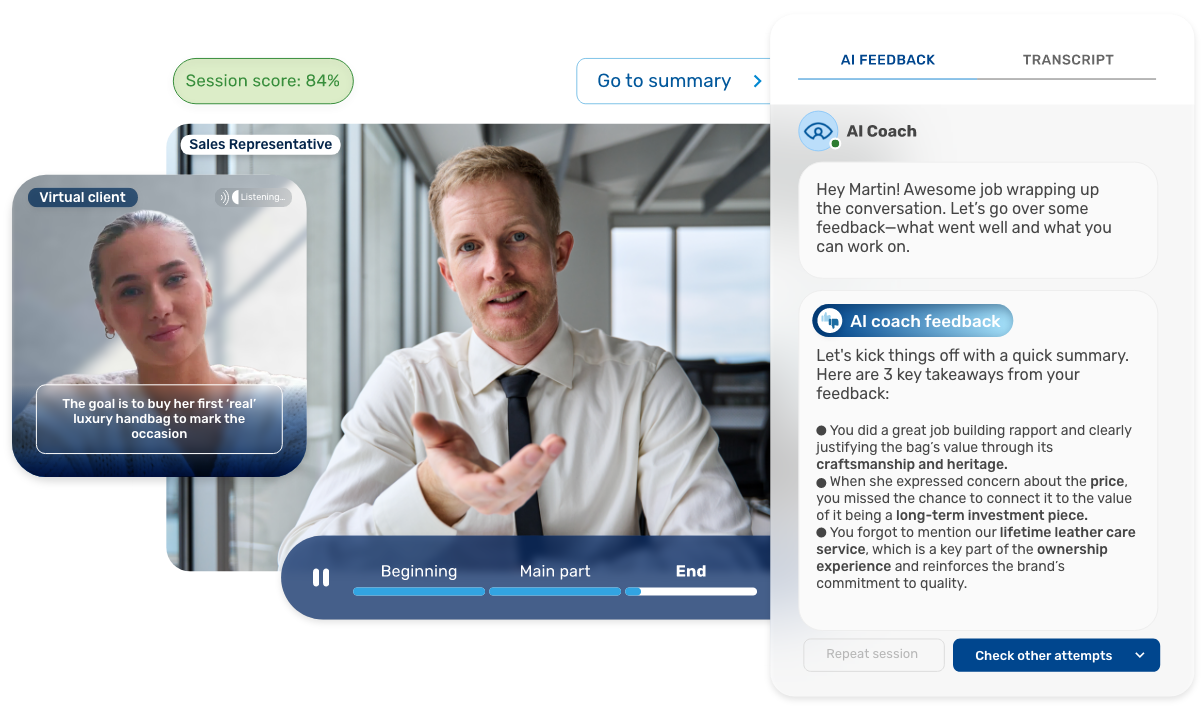
AI coaching in action: a rep practices with a virtual client and receives behavioral feedback scored across 140+ observable cues, before the real call.
I ran a tool audit last year with the head of enablement at a 600-rep insurance company. They had six AI subscriptions running in parallel. Three of them were tracking conversation data that nobody ever read. One was generating outreach copy that the reps were deleting before sending. The coaching platform they had was set to auto-enroll people in modules, which the reps were clicking through in under three minutes each. The one thing they did not have: a way to actually change rep behavior on a live sales call.
This is the pattern across the enterprise sales orgs we work with. According to McKinsey's 2024 AI in B2B Sales research, companies that report the highest AI adoption rates are also the ones most likely to describe the tools as "not delivering expected revenue impact." The problem is not that the tools do not work. The problem is that most sales orgs deploy tools in the wrong sequence, for the wrong problem, without a deployment framework.
This post gives you that framework. We break down the 10 categories of AI tools for sales teams, name the leading platforms in each, and give you a decision diagram for which category to deploy first based on your org's biggest revenue leak.
The best AI tools for sales teams in 2026 fall into 10 categories: AI coaching and role-play, conversation intelligence, CRM AI, revenue intelligence and forecasting, AI outreach, real-time call assistance, sales content and enablement AI, pricing and quote AI, lead scoring and routing AI, and sales knowledge AI. The right category to deploy first depends on your org's biggest revenue leak: ramp time, win rate, pipeline coverage, or retention.
For enterprise sales teams (300+ reps), the highest-ROI first deployment is typically either conversation intelligence (if your win rate problem is post-call) or AI coaching (if your win rate problem is rep behavior before and during the call). Deploy one category at a time. Measure behavioral lift, not just feature usage.
The AI Tools Adoption Gap
Which AI Categories Actually Move Revenue
Not all AI tool categories produce the same impact at the same deployment stage. This chart shows where each category tends to deliver measurable revenue impact in enterprise deployments.
The 10 AI Tool Categories for Sales Teams: What Each Does and When to Use It
Each category solves a different problem in the revenue cycle. The mistake most orgs make is buying overlapping tools in the same category instead of building coverage across the full cycle. Here is the complete map.
| Category | What it solves | Leading platforms | Deploy when |
|---|---|---|---|
| AI Coaching and Role-Play | Rep behavior change before and during live calls, scores observable behaviors per utterance, not just call outcomes. | Retorio and other AI coaching and role-play platforms | Win rate is low and managers cannot identify why. Ramp time exceeds 90 days. New product launches require consistent messaging. |
| Conversation Intelligence | Post-call analysis: what was said, talk ratio, keyword flags, competitive mentions. Pattern recognition across deal outcomes. | Gong, Chorus by ZoomInfo, Salesloft Conversation Intelligence | You have enough call volume (50+ calls/week) and want to build a library of what winning calls look like. Good foundation for coaching programs. |
| CRM AI (forecasting and next-best-action) | Automated deal scoring, activity logging, next-step recommendations. Reduces CRM hygiene debt. | Salesforce Einstein, HubSpot AI, Pipedrive AI | CRM data quality is poor. Reps spend more than 20% of their time on administrative tasks. Forecast accuracy below 70%. |
| Revenue Intelligence and Forecasting | Pipeline health, deal risk signals, revenue forecasting across accounts and segments. Board-level visibility into future revenue. | Clari, Aviso, Boostr | Forecast miss rate exceeds 15%. CRO needs deal-level visibility without manually reviewing every opportunity. |
| AI Outreach and Email | Personalized outbound at scale. Sequence optimization, response scoring, A/B testing messaging. | Outreach AI, Salesloft AI, Apollo AI | Outbound pipeline coverage is below 3x quota. SDR team is writing the same email 50 times per day. Conversion from cold outreach below 2%. |
| Real-Time Call Assistance | In-call whisper prompts, battlecard surfacing, objection handling cues delivered to the rep in real time. | Trellus, MeetGeek, Wingman (now Clari Copilot) | Reps consistently stumble on the same objections or competitive questions. High variation in call quality across the team. |
| Sales Content and Enablement AI | Content recommendation, auto-generated follow-up assets, proposal personalization, ROI calculators. | Highspot AI, Seismic AI, Showpad AI | Content utilization below 20% (most content never used by reps). Long proposal creation cycles. Sales and marketing content misalignment. |
| Pricing and Quote AI | Dynamic pricing recommendations, CPQ automation, approval workflows, margin optimization. | Conga AI, PandaDoc AI | Average deal size variance above 40%. Reps over-discounting in final stages. Quote-to-close cycle exceeds 10 business days. |
| Lead Scoring and Routing AI | Intent signal aggregation, account prioritization, lead-to-account matching, territory routing. | 6sense, Demandbase AI | SDR team contacts too many low-fit leads. High variation in account quality across reps. ABM programs need prioritization logic. |
| Sales Knowledge and Enablement AI | Instant answers to product questions during calls, competitive intel retrieval, compliance-safe messaging for regulated industries. | Retorio (coaching focus, EU AI Act aligned), sales-enablement suites (enablement focus) | Reps cannot answer basic product questions on calls. Knowledge base is large and hard to search. Regulated industries (pharma, insurance, financial services) with compliance requirements. |
Which Category to Deploy First: A Maturity-Based Staircase
Where you start depends on your stage. Early-stage orgs should solve pipeline coverage before coaching behavior. Enterprise orgs that already have pipeline but miss on conversion need AI coaching and conversation intelligence first. Here is the deployment staircase.
A Closer Look: AI Coaching and Role-Play
This is the category where Retorio competes alongside other AI coaching and role-play platforms. It is also the category most often conflated with conversation intelligence, which causes orgs to skip it when they already have Gong or Salesloft.
The distinction matters. Conversation intelligence analyzes what happened on a call after the fact. AI coaching and role-play changes rep behavior before the call, through repeated practice against AI-generated virtual buyers. The two categories are complements, not substitutes. Think of conversation intelligence as the diagnostic layer and AI coaching as the intervention layer.
across enterprise deployments, Retorio's AI sales coaching approach produces a +27% average increase in sales performance and a +14.6% increase in quota achievement. The mechanism is not content delivery. It is behavioral scoring: the platform analyzes 140+ observable behavioral cues per utterance, identifies the specific behavior that needs to change (not a trait, a behavior), and gives the rep a targeted practice loop.
Where platforms in this category differ:
Score tone, pace, filler words. Useful for SDR call clarity. Limited diagnostic depth for complex enterprise selling situations where non-verbal behavior is critical.
Score verbal, vocal, and visual behavioral signals together. Deeper diagnostic for enterprise sales where buying committees evaluate rep credibility holistically. Higher compliance readiness for regulated industries.
The evaluation question to ask any vendor in this category: what happens after the session ends? If the answer is "the rep reviews their score," that is passive feedback. If the answer is "the rep receives a targeted next-practice loop on the one behavior that most affected their score, automatically queued for the next day," that is AI coaching. The distinction drives the ROI difference.
For more on evaluating vendors specifically in this category, see our comparison of top AI sales coaching software in 2026.
5 AI Tool Deployment Mistakes That Kill ROI
5-Step Framework: How to Pick Your First AI Tool Category
Before evaluating vendors, run this five-step diagnostic. It takes one hour with your head of sales and head of enablement. It will prevent you from buying into the wrong category.
Where are you on the staircase? Early-stage orgs (under 50 reps, no repeatable process yet) need CRM hygiene and pipeline coverage tools first. Growth-stage orgs (50-300 reps, process exists but execution is inconsistent) need AI coaching and conversation intelligence. Enterprise orgs (300+ reps, process is solid but performance still varies) need AI coaching plus revenue intelligence.
Signal: if you do not have a documented sales process and consistent CRM hygiene, no AI tool will help you. Fix those first.
Is your biggest problem pipeline coverage (not enough qualified opportunities), win rate (enough pipeline but too many deals lost), ramp time (new reps taking too long to hit quota), or retention (customers churning faster than the org acquires new ones)?
Signal: pull 90 days of deal data. More than 60% of losses at one stage point to win rate and AI coaching. More than 40% of pipeline marked "stalled" points to pipeline quality and lead scoring.
Pipeline coverage problem: lead scoring and routing AI, AI outreach. Win rate problem: AI coaching and role-play, conversation intelligence, real-time call assistance. Ramp time problem: AI coaching and sales knowledge AI. Retention and expansion problem: revenue intelligence plus AI coaching for customer success reps.
Signal: if you have multiple problems, pick the one that has the highest dollar amount attached to it. Fix the largest revenue leak first.
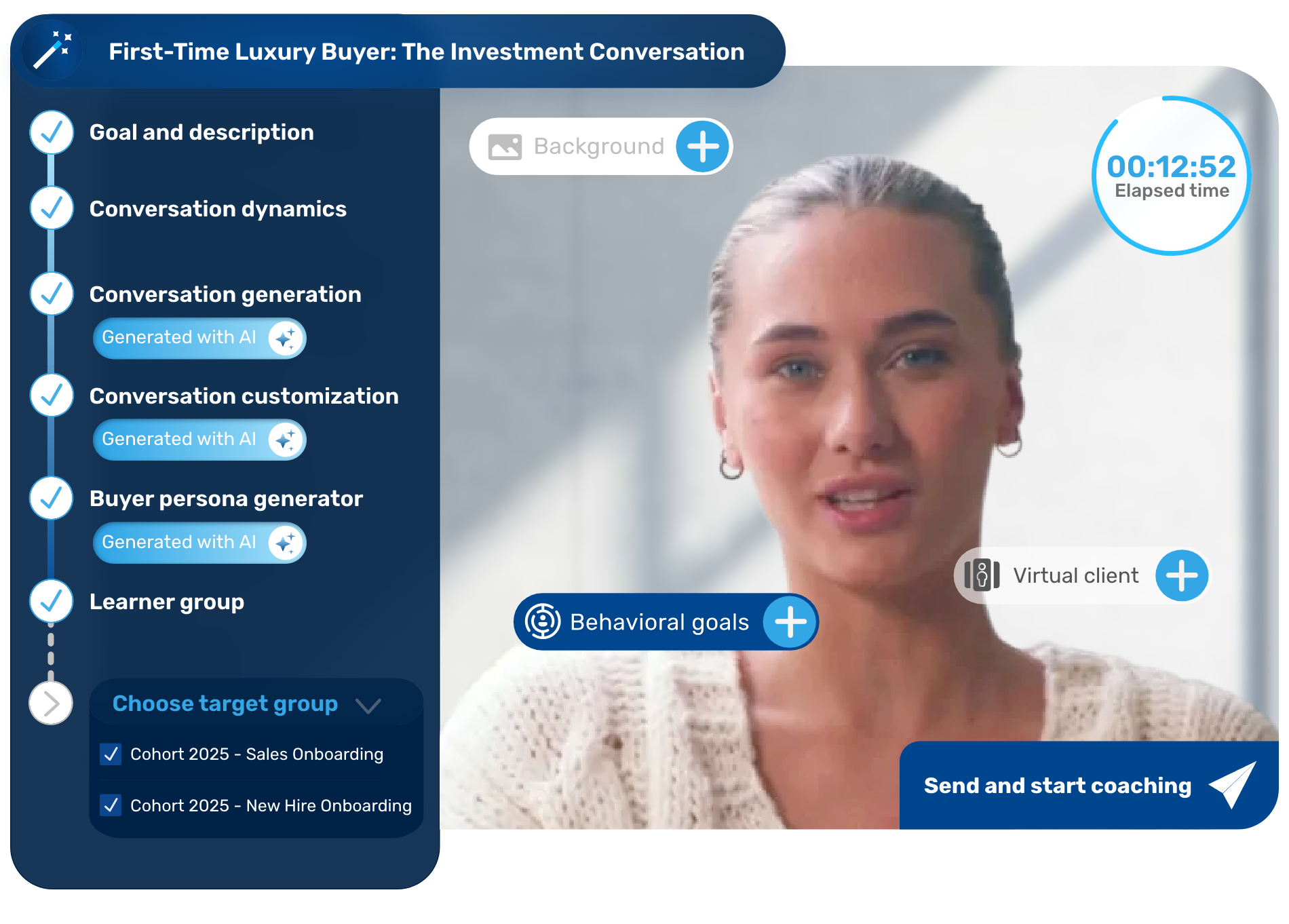
Pick 20-30 reps across 2-3 manager pods. Define a single behavioral KPI before the pilot starts (not a usage metric, a performance metric). Set a minimum threshold: if the tool does not move the KPI by a measurable amount in 30 days, do not expand.
Signal: vendors who resist defining a behavioral KPI before the pilot are selling dashboards, not outcomes. Require it as a condition of the pilot.
Post-pilot, compare the behavioral KPI for the pilot cohort against the control cohort. The comparison has to be behavioral (discovery question quality score, objection handling success rate, talk-to-listen ratio on key call moments) not just activity (sessions completed, emails sent, dashboards viewed). Activity metrics hide adoption theater.
Signal: if you cannot construct a before/after behavioral comparison, the tool was not measuring behavior. Behavior-measuring tools are the only ones that produce durable revenue impact.
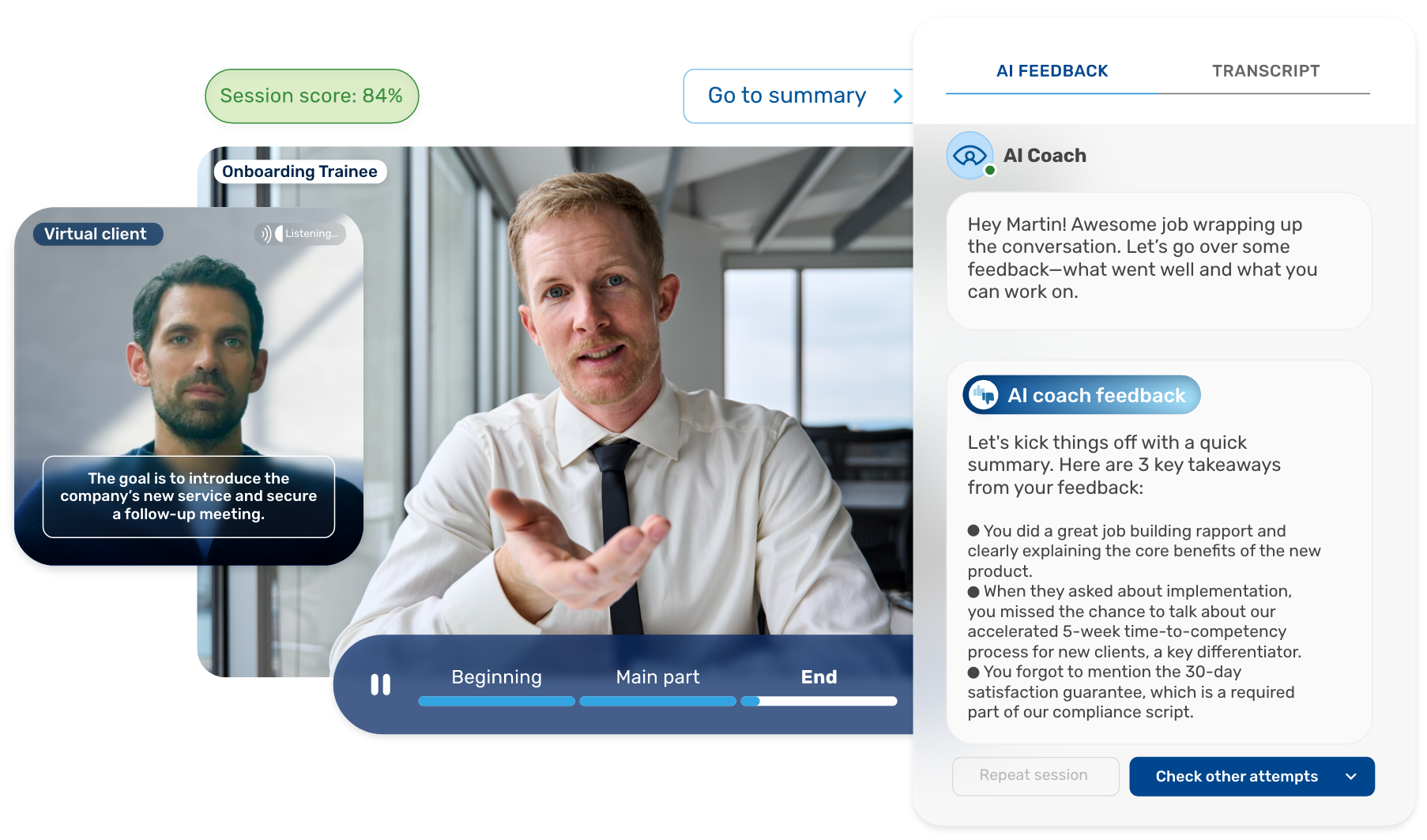
See how Retorio's AI coaching platform trains reps through repeated behavioral practice, the intervention layer this category is built around.
The Right Stack for 2026
AI tools for sales teams are not a single purchase decision. They are a portfolio built in sequence, starting with your biggest revenue leak and expanding from there. The 10-category framework above gives you the map. The 5-step diagnostic gives you the sequence.
One pattern holds across every high-performing AI-enabled sales org we work with: they deploy fewer tools than the average, but they measure each one against a behavioral KPI before expanding. The orgs that struggle deploy more tools faster, measure adoption rates, and wonder why the revenue numbers do not move.
If your biggest problem is win rate or ramp time, the AI coaching category is where to start. It is the only category that directly changes what a rep does in a live conversation, before the outcome is decided. For enterprises operating in regulated industries (insurance, pharma, financial services), it is also the only category built specifically for compliance-safe deployment under GDPR and the EU AI Act.
For a deeper look at how Retorio fits within the coaching and role-play category alongside other platforms, read our analysis of AI sales coaching for enterprise teams. For the broader sales stack context, including how to integrate coaching into your existing CRM and conversation intelligence tools, see the enterprise sales stack of 2026.
Start with the coaching layer that moves behavior
Retorio is ISO 27001 certified, GDPR-compliant, EU AI Act aligned, and hosted on GCP with EU data residency. 15x expected first-year ROI, validated across 50+ enterprise clients.
Test AI coach in actionFrequently Asked Questions
What are the best AI tools for sales teams in 2026?
The best AI tools for sales teams in 2026 depend on your organization's stage and biggest revenue problem. For enterprise teams focused on win rate and ramp time, AI coaching and role-play platforms (Retorio and other AI coaching and role-play platforms) and conversation intelligence platforms (Gong, Chorus, Salesloft) are the highest-ROI categories. For growth-stage teams needing pipeline, lead scoring and AI outreach tools (6sense, Apollo AI, Outreach AI) come first. Deploy in sequence based on your revenue leak, not based on vendor popularity.
How many AI tools should a sales team use?
Most enterprise sales teams run 4 or more AI tool subscriptions simultaneously, but research consistently shows that tool count does not correlate with revenue impact. The orgs with the best outcomes deploy 2-3 tools with high adoption and clear behavioral KPIs, not 6-8 tools with low usage. Start with one tool, prove behavioral lift in a 30-day pilot, then expand. Never run more than two new tools simultaneously, as adoption quality drops below a meaningful threshold.
What is the difference between AI sales coaching and conversation intelligence?
Conversation intelligence (Gong, Chorus, Salesloft) analyzes calls after they happen to identify patterns in winning versus losing deals. AI sales coaching and role-play (Retorio and other AI coaching and role-play platforms) changes rep behavior before calls happen, through AI-simulated practice against virtual buyers. Conversation intelligence is a diagnostic tool; AI coaching is an intervention tool. Both are valuable and they compound when deployed together: conversation intelligence identifies the behavior gap, AI coaching closes it.
Are AI sales tools GDPR-compliant?
Compliance varies significantly by vendor and by the type of data the tool processes. Any tool that records, analyzes, or scores employee behavior (voice, video, or text) is subject to GDPR Article 22, which governs automated decision-making affecting individuals, and to the EU AI Act's transparency and human oversight requirements. For regulated industries (insurance, pharma, financial services) operating under IDD, MLR, or MiFID, additional sector-specific requirements apply. Retorio is ISO 27001 certified, GDPR-compliant, EU AI Act aligned, and hosted on GCP with EU data residency. Always review the full data processing agreement before deploying any AI tool that touches employee data.
What is the ROI of AI tools for sales teams?
ROI varies by category and how it is measured. For AI coaching and role-play, enterprise deployments with measurable behavioral KPIs show +27% average increase in sales performance, +14.6% increase in quota achievement, and 38-42% reduction in ramp time in documented customer studies. For conversation intelligence, typical improvement in win rate ranges from 10-25% when combined with active coaching programs. Revenue intelligence platforms report 15-30% improvement in forecast accuracy. Tools that measure activity rather than behavior (AI outreach, content AI) show higher variance in ROI and are more sensitive to implementation quality.
For a deeper look at one tool category in this list, see our guide to AI role play platforms for sales teams.
Written with help from LLMs, edited and checked by Önder Mutluer, Website Manager and Marketing Strategist, and Dr. Patrick Oehler, Co-founder and Co-CEO. Reviewed by Peter Holdenried, Head of Sales. How this article was researched, written and checked, and who reviews which topic: Retorio editorial policy.