


A new hire training plan is a structured, day-one-to-day-90 program that turns a new employee into a productive team member on a set timeline instead of by chance. Build it in seven steps: start before day one, run a 30-60-90 day framework, assess individual needs, personalize with AI, add mentors, and give regular feedback. Retorio customers using structured, AI-assisted onboarding have cut onboarding time by 41% and trainer effort by 69%.
A sales manager emails a new account executive three days before the start date with the onboarding toolkit and a 30-60-90 day plan. On day one, the rep already knows the CRM, the team norms, and the first 30-day goals, so week one goes straight to calls, not paperwork.
Published October 2023 · Last verified July 2026.
When a new hire joins, the clock starts immediately. From meeting the team to learning the tools, a structured training plan is what decides whether they feel prepared or overwhelmed in the first few weeks. Roughly 50% of hourly workers quit within their first 120 days, a pattern most retention research traces back to weak onboarding rather than the job itself.
This guide covers what a new hire training plan needs, the five components every plan should have, seven steps to build one, and a 30-60-90 day framework you can adapt directly, written for anyone responsible for getting new employees productive fast.
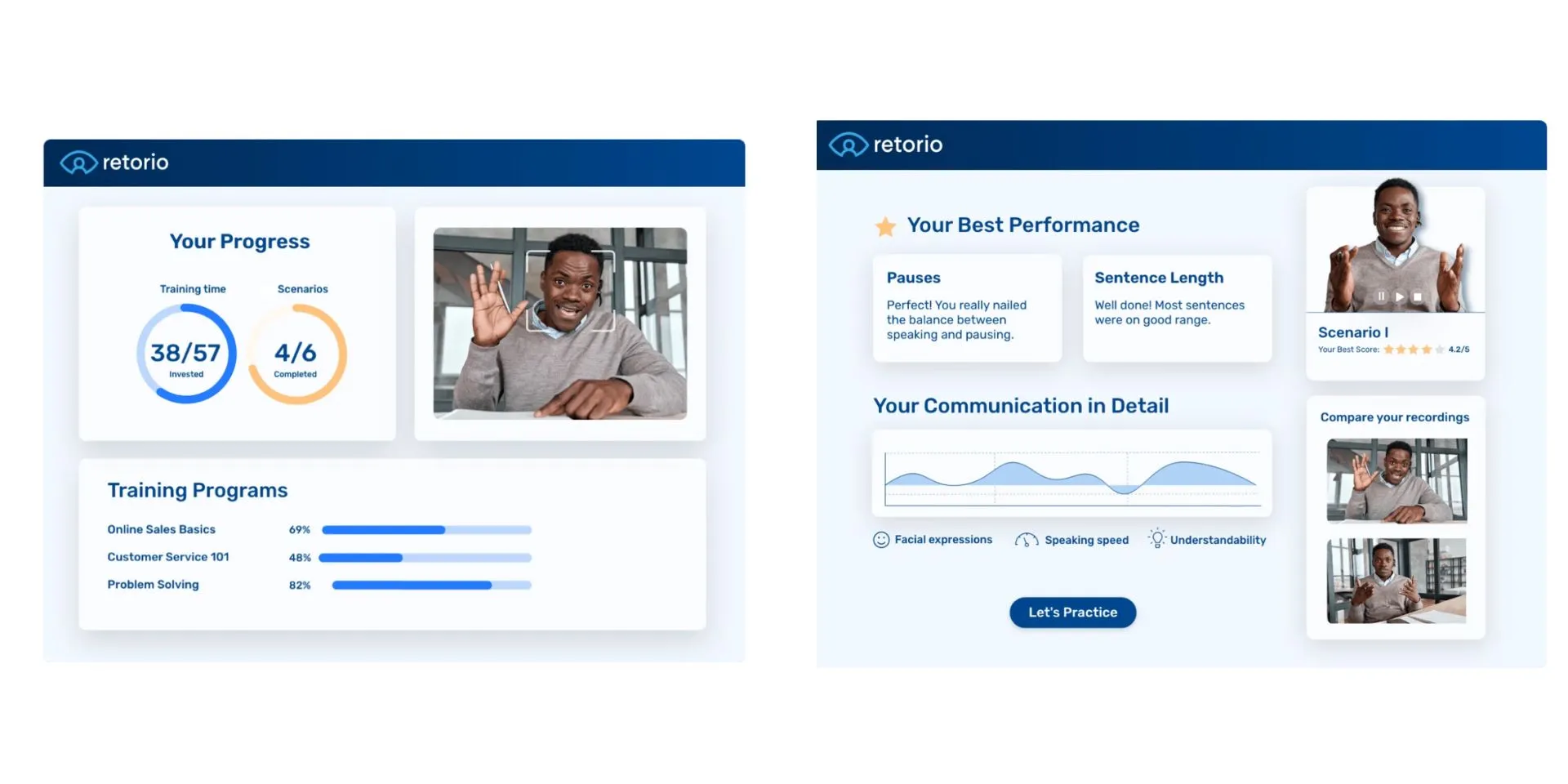
Why does a new hire training plan matter?
A structured plan is not paperwork, it is an efficiency engine. New hires with a clear plan apply what they know to real tasks from day one instead of learning by trial and error, they make fewer mistakes because procedures are standardized rather than improvised, and they stay longer: high job satisfaction during onboarding is one of the strongest predictors of long-term retention. Skipping the plan does not save time, it moves the cost to later, in rework, in manager hours, and in early attrition.
The pattern shows up in the data: Vodafone VOIS cut onboarding time by 41% and trainer effort by 69% after moving from ad-hoc coaching to a structured, measurable onboarding process. Nürnberger Versicherung saw new-agent turnover drop 72% under the same approach. Structure changes outcomes, not just paperwork.
What does poor onboarding cost?
A weak start is not a neutral outcome, it moves cost later into the year. New hires who are left to work it out alone disengage before anyone measures them, and the bill arrives as rework, manager hours, and early attrition. Gallup's research on engagement finds managers account for at least 70% of the variance in team engagement scores, and much of that influence lands in the first months on the job, which is exactly the window a training plan governs.
Four things a structured plan buys, each of which shows up in the numbers:
- Capability. Structured coaching closes named skill gaps instead of hoping proximity to a senior colleague does it. It also signals that the new hire's development is a priority, which affects whether they stay.
- Productivity from day one. A clear sequence reduces repeated errors and shortens the ramp curve. Reps work faster and with fewer mistakes when they know what good looks like and why.
- Policy and culture alignment. Coaching new hires on the legal, ethical, and behavioral standards of the business embeds the right habits before the wrong ones form. Culture is caught in the first 90 days, not taught from a handbook.
- Morale and retention. New hires who feel coached from day one report higher satisfaction. A strong start changes the probability that the person is still there past year one.
What should a new hire training plan include?
An effective new hire training program keeps managers and new hires aligned from day one. Every plan needs these five components:
How do you build a new hire training plan? 5 steps
Below are the five moves that turn a training plan from a document into something new hires actually use.
Start before day one
Send a welcome email with an onboarding toolkit: company overview, policies, and paperwork to complete before the first day. New hires arrive already oriented instead of spending day one on forms, and managers save the hours normally lost walking through documents in person.
Run a 30-60-90 day plan
Use a 30-60-90 day framework to sequence goals: culture and tools in the first 30 days, cross-team collaboration and check-ins by day 60, and full ownership of KPIs by day 90. See the full 30-60-90 framework and strategies below.
Assess individual needs
A one-size-fits-all plan wastes time re-teaching skills a new hire already has. A short needs assessment surfaces existing strengths, gaps, and preferred learning style, so the plan targets what is actually missing.
Personalize with AI
AI-assisted onboarding builds a training path around each new hire's role, skill level, and pace instead of one generic curriculum for everyone. It is also what makes personalization possible at 50 new hires a quarter, not just 5.
Add mentors and regular feedback
Pair each new hire with an experienced mentor for context and quick answers, and schedule short, frequent check-ins rather than one formal review. Harvard Business Review's analysis of performance management finds immediate, in-context feedback changes behavior faster than delayed, formal reviews.
Source: Retorio customer case studies, Vodafone VOIS (onboarding time, trainer effort) and Nürnberger Versicherung (turnover).
Which coaching habits make the plan work?
The five build steps above set the structure. These are the habits that decide whether the structure produces capable reps or just a completed checklist.
Leave room for self-discovery
Structure works best paired with reflection. Give new hires dedicated space in the first 30 days to name their own strengths and blind spots, then bring those findings into a check-in. When a manager asks what the rep noticed about their own performance rather than only telling them what went wrong, the relationship shifts from evaluative to developmental, and the habit of self-coaching outlasts the onboarding window.
Coach on the job, not in a training room
The fastest path from knowledge to competence is practice under real conditions. Two methods carry most of the weight. Job shadowing pairs the new hire with a senior rep for their first real interactions, with an immediate debrief afterwards. Tandem practice has the new hire and an experienced colleague run a task together, with the senior giving guidance in the moment. Both deliver correction in context rather than three days later.
Teach the culture from day one
Culture is not communicated in an onboarding slide. It is observed, and it is reinforced by how managers behave. Show new hires the values the business actually lives by, and demonstrate them in how the new hire is treated during the first 90 days. How you onboard someone is a direct signal of how you treat employees, and that signal lands well before the first performance review.
Ask experienced colleagues what was missing
The plan should change with every cohort. Ask people who joined 12 months ago what they wish they had been coached on sooner, what felt redundant, and what actually helped. Two questions surface most of it: "What skill do you wish you had built in your first 30 days?" and "What part of your onboarding slowed you down most?" Their answers expose gaps no manager can see from outside.
Which delivery methods work for new hires?
Delivery method is one of the five components above, and it is the one most often decided by default rather than on purpose. Whichever you pick, build in repetition: without reinforcement, roughly 70% of new information is forgotten within 24 hours, a pattern first measured in Ebbinghaus's work on the forgetting curve in 1885 and repeatedly confirmed since.
| Method | How it works | Fits best when |
|---|---|---|
| On the job | New hires learn responsibilities by performing them, in a live or practice setting, supervised by a manager or mentor. | The role is hands-on and a senior colleague has capacity to supervise. |
| Online | Modules, video sessions, and practice scenarios reached from any device, completed at the new hire's pace. | The team is remote or distributed, or cohorts start on different dates. |
| Hybrid | An in-person introduction followed by virtual practice and check-ins. Also called blended. | The workforce is hybrid and you want a shared start without repeating live sessions. |
| Peer learning | Experienced colleagues pass on what they know directly, through paired work and structured debriefs. | Institutional knowledge sits with a few people and is not written down. |
What does a 30-60-90 day framework look like?
A 30-60-90 day plan turns broad goals into a checkable sequence. Adapt the phases below to the role, but keep the shape: knowledge first, then collaboration, then ownership.
| Phase | Focus | Milestone |
|---|---|---|
| First 30 days | Company culture, policies, tools, and initial training sessions | Completes onboarding and platform training |
| Day 60 | Cross-team collaboration, regular manager check-ins | Handles first independent tasks with support |
| Day 90 | Full ownership of role KPIs, proactive involvement | Works independently and hits first-quarter targets |
How does AI change new hire training?
AI does not replace a training plan, it makes personalizing one practical at scale. Instead of a single curriculum for every new hire, an AI coaching platform builds a training path around each person's role, existing skill level, and pace, and gives instant feedback on practice scenarios so a manager is not the only source of coaching. This mirrors Harvard Business Review's research on corporate learning and development, which finds organizations investing in structured, ongoing practice, not one-off content, see far stronger and more durable skill transfer.
Previously, practicing a scenario with a manager took 3-5 hours. Now, with Retorio's AI Sales training platform, our agents conduct an AI role play 5 times for each scenario independently.
Ivo Nikolov, Business Analyst at VodafoneThe result for onboarding specifically: new hires practice as many times as they need before a real conversation counts, managers see objective progress instead of guessing, and the personalization that used to require a 1:1 trainer for every new hire now scales to an entire cohort at once.
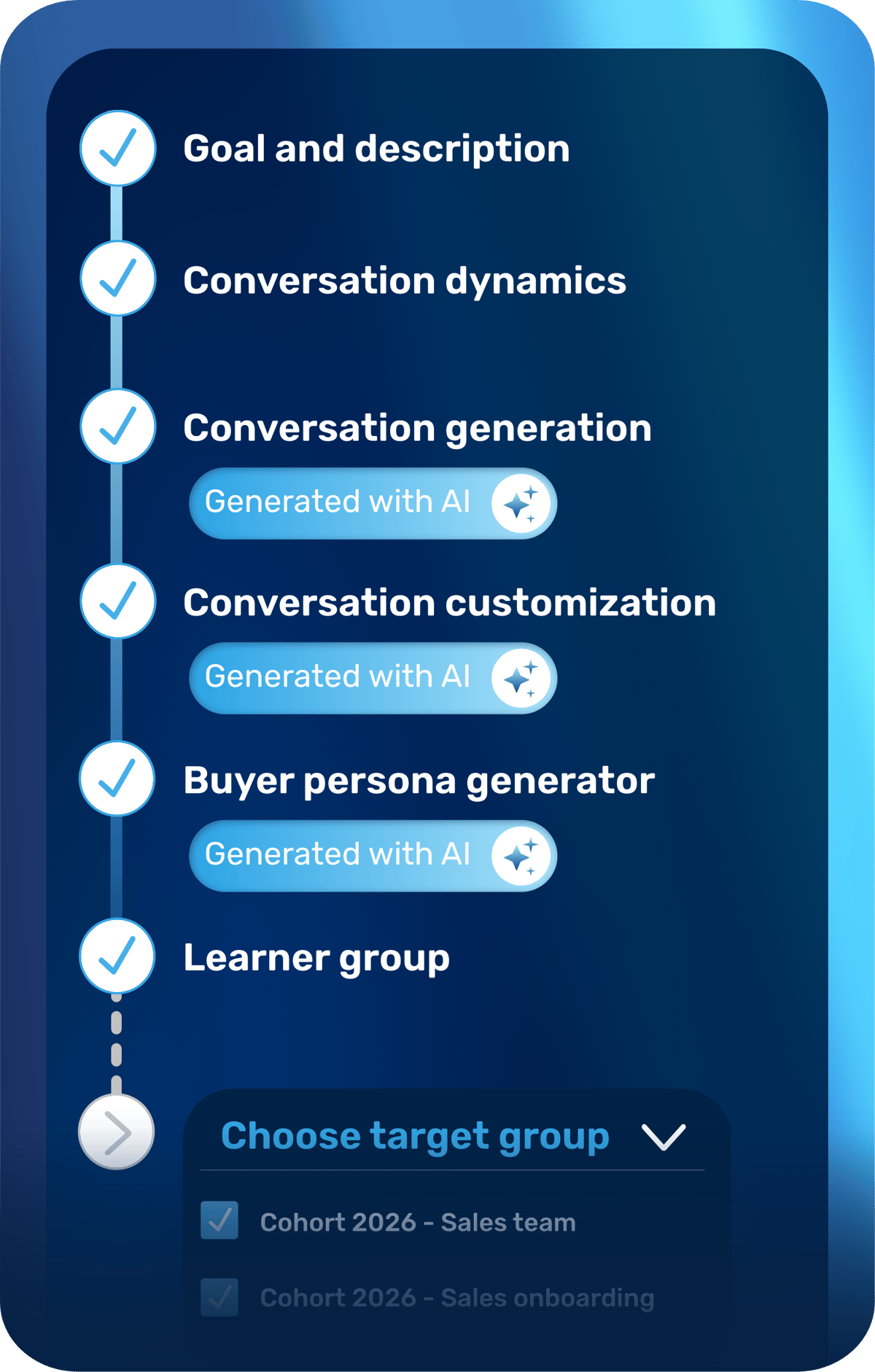
See how AI coaching fits into your new hire training plan.
Test AI coach in actionWhich mistakes slow new hire ramp?
Well-intentioned plans still stall when they repeat these four patterns:
- Front-loading information without practice. Two weeks of product and process presentations followed by "now go perform" is the most common cause of a slow ramp. Knowledge without repetition does not produce competence.
- No defined milestones. Without 30-60-90 checkpoints, neither the manager nor the new hire knows whether the plan is working until it is too late to correct.
- Treating every new hire identically. A rep with five years of enterprise experience needs a different plan than someone joining from university. One plan sized for both serves neither.
- Skipping the culture conversation. Unwritten rules about how decisions get made are rarely in the handbook. New hires who do not learn them quickly disengage, or make social errors that cost trust before day 90.
Conclusion
A new hire training plan works when it is structured, personalized, and measured, not when it is a folder of documents handed over on day one. Start before day one, sequence goals with a 30-60-90 day framework, assess what each new hire actually needs, and use the right KPIs to know whether it is working. The teams that treat onboarding this way see it in the numbers: faster ramp, less trainer effort, and new hires who stay.
Key takeaways
Frequently asked questions
What is a new hire training plan?
A new hire training plan is a structured program that integrates new employees into an organization by covering company culture, role-specific processes, tools, and the metrics used to measure success, usually sequenced over the first 30 to 90 days.
What is the difference between onboarding and training?
Onboarding is a short-term process, usually the first few weeks, that acclimates a new hire to company policies and culture. Training is the ongoing process, often 6 to 12 months, that builds the specific skills and competencies the role requires. An effective new hire training plan folds training into onboarding rather than treating them as separate.
Why is an effective new hire training plan important?
A structured plan shortens ramp-up time, improves retention, and boosts productivity by making sure new hires understand their role, the company's expectations, and how to succeed from day one instead of learning by trial and error.
How long should a new hire training plan last?
Most plans span 30, 60, or 90 days depending on role complexity, with lighter ongoing development continuing after the formal onboarding period ends.
What are the most common mistakes in new hire training?
Three show up repeatedly: unclear expectations that leave new hires guessing what success looks like, overloading new hires with more information than they can retain in one sitting, and delaying onboarding, which extends the time before a new hire contributes and adds avoidable cost.
How do you measure the effectiveness of a new hire training plan?
Track three things: time-to-productivity (days until the new hire hits a defined output target), 90-day retention, and manager-rated readiness at each 30-day checkpoint. The quantitative metrics tell you whether the plan is working. Qualitative feedback from new hires and their managers tells you why. Review both after every cohort.
Can AI replace human mentors in new hire training?
No, and it should not try to. AI coaching handles the high-repetition practice that human coaches do not have time for, running a scenario until a behavior becomes reliable. Mentors provide judgment, context, and the relationship that determines whether a new hire feels safe admitting what they do not know. The strongest plans use both: AI for volume, people for meaning.
How can AI improve a new hire training plan?
AI can personalize training paths to each new hire's role and skill level, provide practice scenarios with instant feedback, track progress in real time, and free managers to focus their 1:1 time where it matters most, rather than repeating the same onboarding content for every new hire.
Written with help from LLMs, edited and checked by Önder Mutluer, Website Manager and Marketing Strategist, and Dr. Patrick Oehler, Co-founder and Co-CEO. How this article was researched, written and checked, and who reviews which topic: Retorio editorial policy.