


The most effective sales training strategies for 2026 shift training from one-off events to a continuous system: diagnose each rep's behavior gap, build rehearsal volume with AI role play, score observable behaviors instead of course completion, coach the specific gap, and reinforce until the behavior sticks. Retorio applies this model across warmth and competence with a manager coaching dashboard.
Example. A Head of Sales Enablement stops relying on a two-day bootcamp. Each rep now rehearses discovery and objection handling with an AI buyer several times a week, gets scored, and her managers coach the two behaviors the dashboard flags for each person.
It is the third week of Q3. The sales class that finished a two-day training bootcamp last month is live on the phones, and their ramp numbers look almost identical to last year's class, the one that sat through the same slides. The content was fine. The reps could pass a quiz on it. But under a real objection, most of them reverted to the same script-reading they showed on day one.
This is the pattern behind most disappointing training budgets. The problem is rarely the content. It is that content completion is not the same thing as skill, and a one-off event cannot produce a behavior that holds up under pressure. The strategies that work in 2026 all share one property: they treat training as a continuous system that changes what a rep does on a live call, then measure whether it actually changed.
Below are the ten strategies that separate programs which move revenue from programs which only move completion rates, with the enterprise data and the practitioner detail to put each one to work. If you want the program-level view first, see our guide to the best corporate sales training programs, then come back to build the strategy layer.
(Retorio data)
(Retorio data)
Each strategy below maps to one stage of this loop. The score stage is highlighted because it is the one most training programs skip.
The 10 sales training strategies that work in 2026
These are ordered as a system, not a menu. The first three set up what you measure, the middle four change behavior, and the last three make the change stick and prove it to the business.
What a continuous, scored training system moves in enterprise deployments
Enterprise teams that move from event-based training to a continuous, scored system report a 41% reduction in overall onboarding time and a 69% reduction in trainer effort (from 26 hours to 8 hours per new hire in the Vodafone VOIS program), and Nurnberger Versicherung documented 72% lower turnover in coached teams.
Which sales training method actually changes behavior?
Most teams run some mix of four training methods. They are not equal on the things that decide whether a rep changes what they do on a call. Here is how the common approaches compare on the criteria that matter for 2026. Cells marked "Verify with vendor" reflect capabilities that vary by provider and should be confirmed directly.
| Training method | Practice volume | Behavioral feedback | Measurable outcomes | Scales across the team | EU/GDPR + ISO 27001 |
|---|---|---|---|---|---|
| AI coaching with behavioral scoring (Retorio) | Yes Unlimited AI role play, any hour | Yes 140+ cues, warmth and competence, per rep | Yes Per-behavior scores, before and after | Yes No manager-hour ceiling | Yes ISO 27001, GDPR, EU AI Act, EU residency |
| Classroom bootcamp | Partial A few role plays in the room | Partial Trainer opinion, not scored | No Attendance, not behavior | No Limited by trainer time | Yes No platform data |
| E-learning / LMS | No Watch and quiz, no rehearsal | No Quiz scores only | Partial Completion rates | Yes Scales, but not skill | Verify with vendor |
| Manager-led role play | Partial Limited by manager hours | Partial Specific but inconsistent | No Rarely recorded or scored | No Does not scale past a few reps | Yes No platform data |
"Previously, practicing a scenario with a manager took 3-5 hours. Now, with Retorio's AI Sales training platform, our agents conduct an AI role play 5 times for each scenario independently."
Ivo Nikolov, Business Analyst at Vodafone
How to roll out a modern training strategy in 90 days
You do not need to rebuild the whole program at once. Sequence it so the first behavior change is measurable inside a quarter.
5 mistakes that quietly kill a sales training strategy
How to measure whether your strategy worked
A strategy you cannot measure is a hope, not a plan. Track two layers together. Leading indicators tell you the behavior is changing now: rehearsal volume per rep, the behavior score on the target skill, and how fast the skill-gap closes week over week. Lagging indicators confirm it reached the business: ramp time for new hires, conversion or win rate on the deals where the coached behavior applies, and quota attainment. When a leading indicator moves and the matching lagging one follows a quarter later, you have proof the strategy caused the result, which is exactly what you need to defend and grow the budget.
Retorio's cross-customer data shows the pattern at scale: a 15x expected first-year return on investment, up to 20 percent revenue growth within twelve months of scaled adoption, and a +14.6 percent increase in quota achievement. Those are outcomes of the full system, diagnose through reinforce, not of any single training event.
The through-line
Every strategy on this list points the same direction: stop measuring whether a rep consumed the training, and start measuring whether they can run the conversation. That single shift, from completion to observable behavior, is what turns a training budget into revenue.
Watch: the sales training must-haves for 2026
A short walkthrough of the corporate sales training essentials behind the strategies above, from continuous practice to behavioral feedback.
Source: Retorio (YouTube).
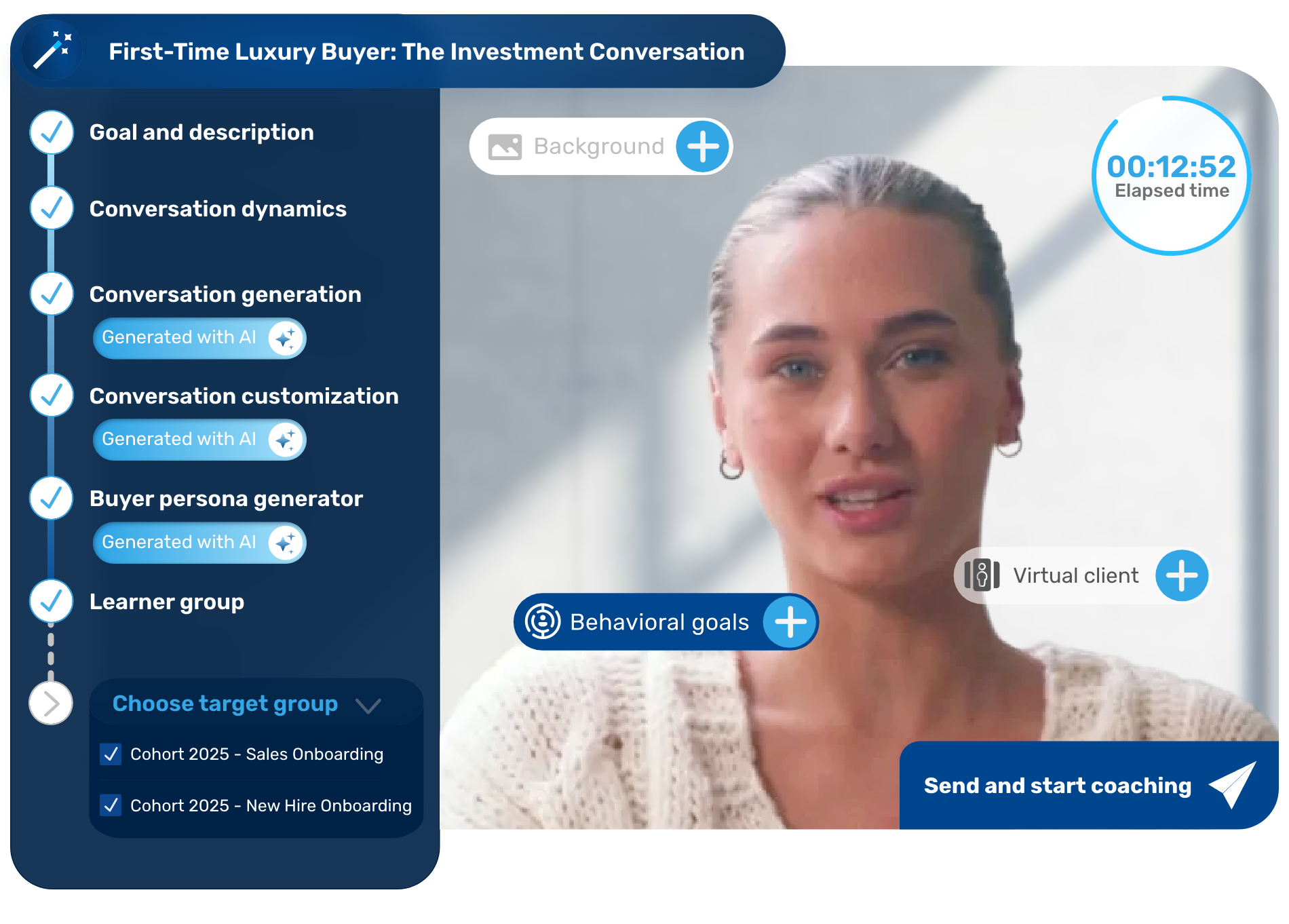
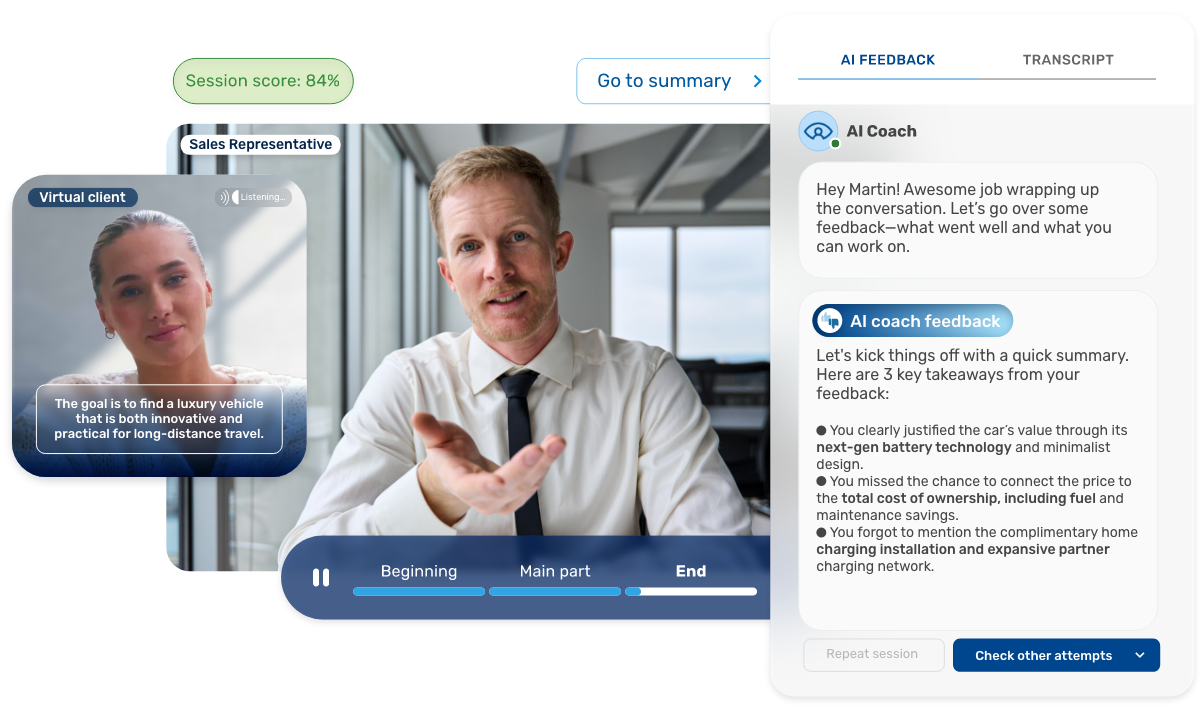
Put these strategies to work. See how scored AI role play changes rep behavior in a live environment.
Test AI coach in action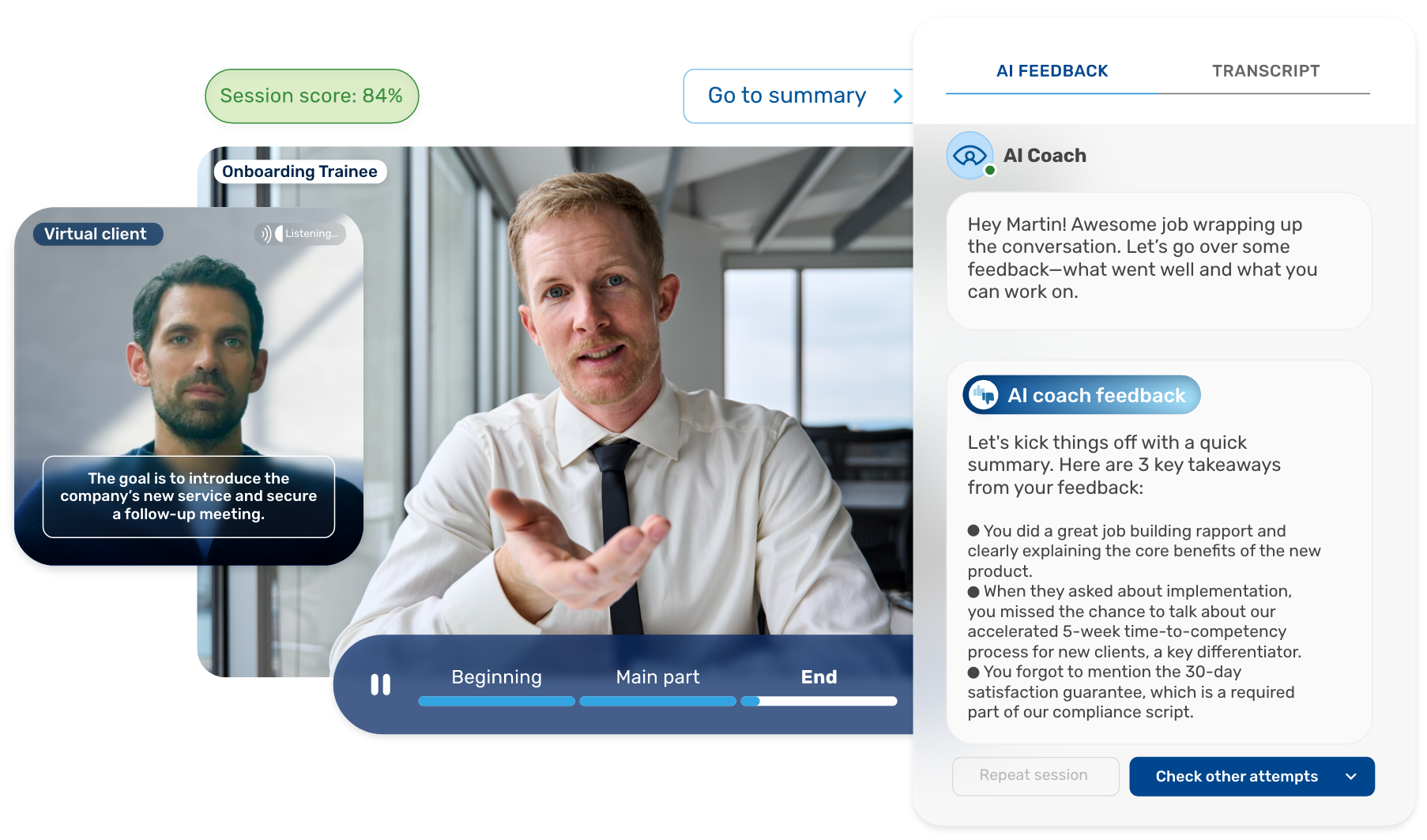
Frequently asked questions: sales training strategies
What are the most effective sales training strategies for 2026?
The most effective strategies treat training as a continuous system rather than an event: diagnose each rep's behavior gap, make practice the unit of work with AI role play, score observable behaviors instead of course completion, coach the specific gap from a dashboard, and reinforce with spaced repetition until the behavior sticks. Tie the whole system to business outcomes so you can prove it worked.
What is the best sales training method?
There is no single best method, but the one that changes behavior most reliably is scored practice: reps rehearse real conversations repeatedly and get behavioral feedback on each attempt. Classroom bootcamps and e-learning build awareness, but only repeated, scored rehearsal converts awareness into a skill a rep uses under pressure.
How do you measure sales training effectiveness?
Measure two layers together. Leading indicators (behavior scores on a target skill, rehearsal volume, skill-gap closure) show the behavior changing now. Lagging indicators (ramp time, conversion, quota attainment) confirm it reached the business. Set a baseline on one behavior before the program so you can show a clear before-and-after.
How is AI changing sales training?
AI makes two previously expensive things cheap and scalable: unlimited realistic practice and objective behavioral feedback. Reps rehearse with an AI buyer any time, and platforms like Retorio score warmth and competence across 140+ verbal, vocal, and visual cues, so managers coach specific behaviors instead of relying on ride-along notes.
How do you reduce new-hire ramp time?
Pair a structured onboarding path with scored practice so new hires rehearse before they face a customer, not after. Retorio's enterprise deployments document a 38 to 42 percent reduction in ramp time and a 41 percent reduction in overall onboarding time, with trainer effort cut from 26 hours to 8 hours per new hire in the Vodafone VOIS program.
Is AI sales training GDPR-compliant?
It depends on the vendor. Retorio is ISO 27001 certified, GDPR-compliant, EU AI Act-aligned, and hosted on Google Cloud Platform with EU data residency. For any platform, confirm in writing where conversation data is processed and stored before you roll it out to the field.
Written with help from LLMs, edited and checked by Önder Mutluer, Website Manager and Marketing Strategist, and Dr. Patrick Oehler, Co-founder and Co-CEO. Reviewed by Peter Holdenried, Head of Sales. How this article was researched, written and checked, and who reviews which topic: Retorio editorial policy.