

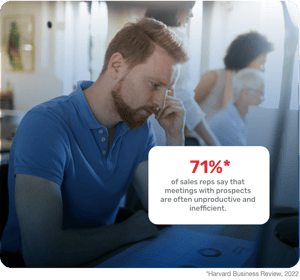
The Sandler Selling Method is a 7-step consultative framework developed by David Sandler in 1967. Its defining principle: the rep qualifies the prospect out, not in. Instead of persuading someone to buy, Sandler-trained reps establish mutual conditions early, surface Pain at an emotional and financial level, and give prospects permission to say no before closing. The framework's hardest step is the Pain step, where most reps default to feature-pitching instead of letting the prospect articulate what the problem is costing them. In 2026, what works from Sandler is the behavioral structure: the Up-Front Contract, the Pain funnel, and the Post-Sell step. What needs modernizing is how these behaviors get coached, given that most enterprise deals now involve 6-10 stakeholders and buying committees that Sandler's original model did not account for.
A head of enablement once described her team's Sandler rollout to me in a single sentence: "We trained them on the framework, and then watched every single rep skip the Pain step because they were afraid of the silence." That silence is the whole method. The moment a rep fills it, they have switched from consultative to transactional and the close rate reflects it.
A head of enablement once described her team's Sandler rollout to me in a single sentence: "We trained them on the framework, and then watched every single rep skip the Pain step because they were afraid of the silence." She ran the coaching program across 40 enterprise account executives at a European technology company. Sandler certification: done. Two-day workshop: done. Conversion rate improvement: none. The problem was not Sandler. It was that nobody had drilled the specific behavior that makes Sandler different from every other framework: sitting in discomfort while the prospect works through what the problem is actually costing them.
The Sandler Selling Method is one of the most cited sales frameworks in B2B enablement conversations, and one of the most poorly implemented. Sales managers describe it as "consultative." Reps describe it as "the one where you ask lots of questions." Both descriptions miss what actually makes the framework work, and more importantly, what makes it hard to coach.
This post gives you a practitioner's view of the 7 steps, the specific behaviors each step requires, what still applies in 2026 enterprise sales, and how to structure the coaching scenarios that build Sandler fluency at scale.
What the Sandler Selling Method Is
David Sandler developed the framework in 1967 after a career in direct sales. His core insight was that traditional sales approaches gave all the psychological control to the buyer: the salesperson pushed, persuaded, and hoped. Sandler inverted the dynamic. The rep sets the rules of the conversation early, qualifies aggressively, and only advances when both parties have agreed on conditions for doing so.
The framework is built on transactional analysis, a psychological model that describes three communication states: Parent (directive, evaluative), Adult (rational, data-driven), and Child (emotional, reactive). Sandler trains reps to operate in the Adult state and to recognize when prospects are in Child (resistant, defensive) or Parent (dismissive, evaluative). The goal is not to overcome resistance but to dissolve it by changing the communication dynamic before it hardens.
The practical result is a 7-step system that feels very different to the prospect than a traditional sales conversation. There is no pressure. There is no pitch until both parties have qualified each other. And the close, when it comes, is almost always a logical conclusion rather than a persuasion event.
The 7 Steps of the Sandler Selling System
The Sandler system is often visualized as a submarine, seven compartments that seal off behind you as you progress. Each step builds on the last, and skipping one creates the structural weakness that surfaces later, usually at close.
SANDLER: 4 COACHING STAGES (MAPPED FROM 7 STEPS)
Bonding and Rapport
This is not small talk. Sandler's bonding step is about establishing the psychological contract: the rep is not here to sell, the prospect is not obligated to be sold to. The tone is peer-to-peer, not vendor-to-buyer. Observable behavior: the rep asks a permission question before pivoting to business, and matches the prospect's communication pace rather than overriding it.
Coaching signal: Does the rep wait for the prospect to engage, or do they launch into agenda-setting within the first 30 seconds?
Up-Front Contract
The Up-Front Contract is arguably Sandler's most practical contribution to modern selling. The rep sets explicit mutual expectations at the start of every conversation: what will happen, what will not happen, and what the decision at the end of the meeting will be. Observable behavior: the rep names the outcome they are looking for ("at the end of this call, either we agree it makes sense to explore this further, or we agree it does not, and both outcomes are fine") before the discovery questions begin.
Coaching signal: Does the rep have a repeatable Up-Front Contract script, or do meetings end without a mutual next step because the outcome was never named?
Pain
The Pain step is the hardest to coach and the one that most differentiates Sandler-trained reps from the rest. Sandler defines Pain on two levels: the surface problem (what the prospect says is wrong) and the emotional cost (how the problem affects the prospect personally and professionally). Most reps stop at surface level because going deeper requires silence, patience, and the willingness to let the prospect find their own words for the impact. Observable behavior: the rep uses the Pain Funnel, a series of progressively deeper questions that moves from "what's the problem?" to "what has it cost you personally?"
What's happened as a result of that? And how long has that been the case? And what have you tried to fix it? And how did that work out? And what does it cost you, in your best estimate, when that happens?
Coaching signal: Does the rep fill the silence after a Pain question with a feature explanation, or do they stay with the question until the prospect answers?
Budget (Investment)
Sandler's budget step covers more than money. It addresses investment in three dimensions: financial (what they can spend), time (what the implementation will require from their team), and emotional (whether they are prepared to change how they operate). Most reps treat this as a price tolerance check. Sandler treats it as a mutual qualification conversation. Observable behavior: the rep surfaces all three investment dimensions and confirms the prospect understands what commitment is required, not just cost.
Coaching signal: Does the rep discuss time and organizational commitment as well as cost, or do they collapse "budget" into "can you afford this?"
Decision Process
Sandler's decision step maps who will be involved in the purchase, how they will decide, and what criteria they will use. This is where the framework's original model shows its age: in 1967, enterprise decisions were made by fewer people. In 2026, the same step needs to map a buying committee across functional areas, security review processes, procurement timelines, and often a competing internal build option. Observable behavior: the rep names at least three decision participants, the approval sequence, and any criteria the prospect has already articulated.
Coaching signal: Can the rep describe the buying committee by role and their likely objection, or do they only know the primary contact's position?
Fulfillment
The Fulfillment step is the presentation, but only for reps who have completed the Pain and Decision steps properly. By this point in a Sandler conversation, the rep should be presenting a solution to a specific, named pain, to an identified set of stakeholders, within a qualified budget and timeline. The presentation is not a pitch deck. It is a confirmation that the rep understood what they heard. Observable behavior: every element of the presentation maps to a specific pain point the prospect named in Step 3. The rep does not introduce new benefits that were not grounded in the discovery.
Coaching signal: Does the presentation reference specific phrases the prospect used during the Pain step, or does it default to generic platform features?
Post-Sell
Post-Sell is the step most training programs leave out. After a verbal yes, the rep's job is to protect the close from buyer's remorse, the natural psychological pullback that follows a commitment decision. Sandler prescribes a structured debrief: confirming the decision, summarizing the mutual commitments, and giving the prospect an opportunity to express any remaining concerns before they surface as cancellations or stalls. Observable behavior: the rep initiates the Post-Sell conversation immediately after the close, not a week later. They name the typical pattern ("most people have a moment of second-guessing after a decision like this") and invite the prospect to surface it.
Coaching signal: Does the rep have a Post-Sell script, or do deals drift after verbal commitment because nobody managed the close-to-signature gap?
Sandler does not work as a script. It works as a set of behavioral habits. The Up-Front Contract takes 60 seconds to say and three months to make automatic.
Head of sales enablement, B2B SaaS company, 250-rep teamWhat Still Works from Sandler in 2026
The framework was designed before CRM, before LinkedIn, before multi-stakeholder enterprise buying committees became standard. Some of its assumptions have not aged well. But the behavioral core remains as valid as it was in 1967, because it is grounded in human psychology, not sales technology.
Research on how people buy, and specifically on the role of psychological safety in decision-making, consistently points to the same principle Sandler encoded: when buyers feel pressure, they retreat. When they feel heard, they advance. A Harvard Business Review analysis of consultative selling behaviors found that the highest-performing reps spend more than 60% of a discovery call listening rather than talking, a ratio that maps almost exactly to what the Sandler Pain step requires.
What works in 2026:
What Needs Updating for 2026 Enterprise Sales
The Decision step assumes a clear authority structure. In 1967, that was reasonable. In 2026 enterprise B2B, it is not. The average enterprise purchase now involves a buying committee of 6 to 10 stakeholders with different priorities, veto rights, and evaluation criteria. The Decision step needs to be explicitly expanded to map this committee, not confirm a single decision-maker. Reps who treat Sandler's Decision step as a one-person check are skipping the committee-mapping work that McKinsey's research on hybrid B2B selling identifies as the single biggest predictor of enterprise deal success.
The Bonding step also needs updating. Sandler's original framing assumed face-to-face meetings and phone calls. The same psychological principles apply to video calls, email threads, and LinkedIn conversations, but the behavioral signals are different. Rapport built over a 45-minute in-person meeting compresses into the first three minutes of a Zoom call, and the behavioral habits that communicate peer-to-peer presence in person (posture, pace, physical space) need translation into digital body language equivalents.
The Sandler Coaching Matrix: What to Drill per Step
Every Sandler step has a distinct coaching challenge. The table below maps each step to its most common failure mode, the observable behavior to develop, and the scenario type that builds that behavior fastest.
BEHAVIORAL IMPROVEMENT PER SANDLER STEP AFTER 6 WEEKS OF AI COACHING
Sandler vs. BANT vs. MEDDIC: When to Use Which
All three frameworks qualify deals and guide discovery. They differ in orientation, depth, and where in the sales cycle they add the most value.
For most enterprise sales teams, the frameworks are not alternatives. The best-performing reps in our coaching data use Sandler's posture and Pain Funnel in discovery, BANT's commercial qualification structure to gate progression, and MEDDPICC's decision-process rigor for complex enterprise deals. The frameworks are complementary, not competing.
The Behaviors Sandler Reps Get Wrong Most Often
How to Coach the Sandler Selling Method at Scale
The core challenge in Sandler coaching is that the hardest behaviors (the silence after a Pain question, the confidence to set an Up-Front Contract with a senior buyer, the discipline to run Post-Sell after a verbal yes) are all behavioral, not informational. A rep can pass a Sandler certification exam and still default to feature-pitching in the third minute of a live call because the behavioral habit is not there yet.
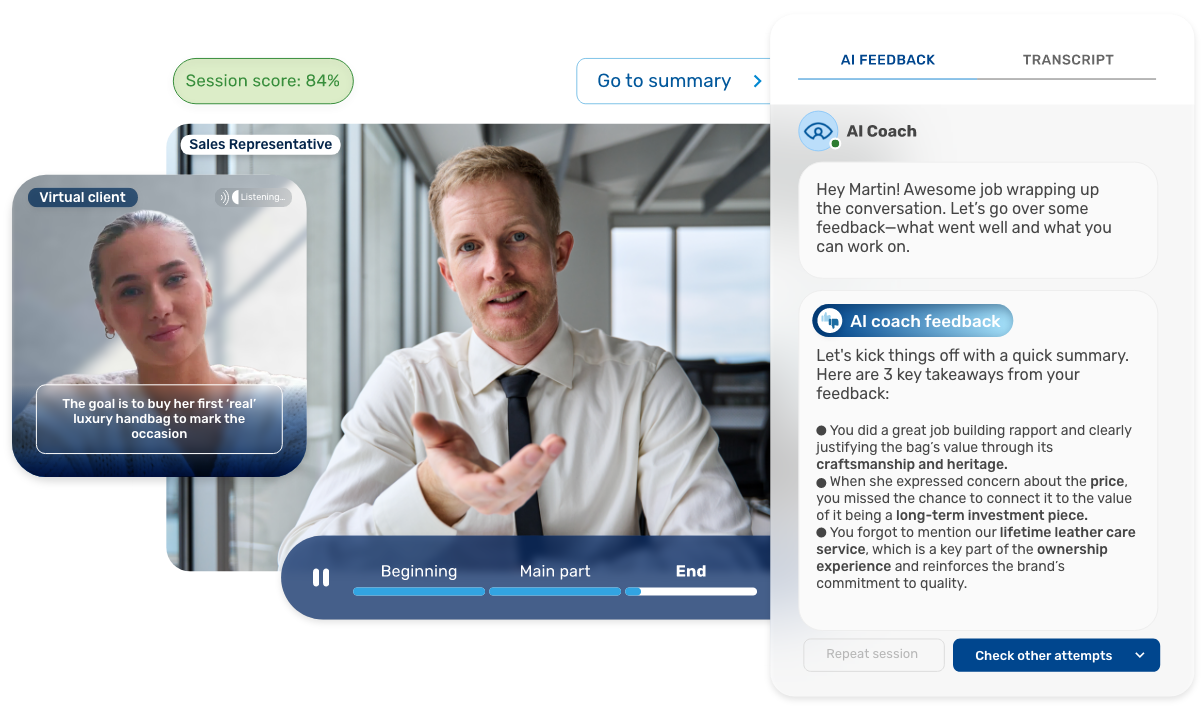
AI coaching at scale requires three things Sandler workshops rarely provide: repetition against realistic scenarios, immediate feedback on specific behaviors, and measurement of improvement over time. A two-day workshop can introduce the framework. It cannot build the automatic behavioral responses that make Sandler work under pressure.
What a structured coaching program looks like in practice:
THE SANDLER COACHING LOOP: FROM WORKSHOP TO HABIT
The scenario specificity matters more than the volume. A rep who practices 10 repetitions of the Pain step against a CFO persona who deflects to "just send a proposal" builds a more durable behavioral response than a rep who completes 50 generic discovery call exercises. The coaching principle is the same one Angela Duckworth describes in her work on deliberate practice: improvement requires working on the specific skill gap in the specific context where it breaks down.
For Sandler, that means designing scenarios around the exact failure modes in the coaching matrix above: the Pain-step silence, the Up-Front Contract setting, the Post-Sell conversation. The AI sales coaching approach that generates measurable quota improvement tracks not just whether the rep asked the right questions but whether they stayed with the Pain Funnel long enough, whether their posture in the Up-Front Contract projected confidence or hedging, and whether the Post-Sell debrief covered all three confirmation points.
Retorio's coaching data shows that reps who complete 6 weeks of structured Sandler scenario practice, with AI behavioral scoring on each session, produce a +14.6% increase in quota achievement. Real-world sales coaching examples consistently show that each Sandler step needs its own practice design, not a single checklist item in a one-time certification.
WHY REPETITION BUILDS REAL SALES BEHAVIORS
Cialdini's six principles of persuasion provide the scientific basis for why Sandler's behavioral structure works. The Pain step, for instance, directly applies the principle of scarcity to the prospect's own problem, making inaction costly rather than inertia-friendly.
Sandler in the Context of Your Broader Sales Methodology Stack
Sales methodology decisions are not binary. Most enterprise sales teams have a methodology on paper and a behavioral reality in the field that is something different. The question is not "should we adopt Sandler?" It is "which specific Sandler behaviors would close the gaps we are seeing in our current pipeline data?"
If your discovery calls end without clear next steps, the Up-Front Contract is the first thing to coach. If your reps are losing deals they thought were won, the Post-Sell step is the gap. If your win rate deteriorates after the initial demo, the Pain step is where the deal was lost, three weeks earlier.
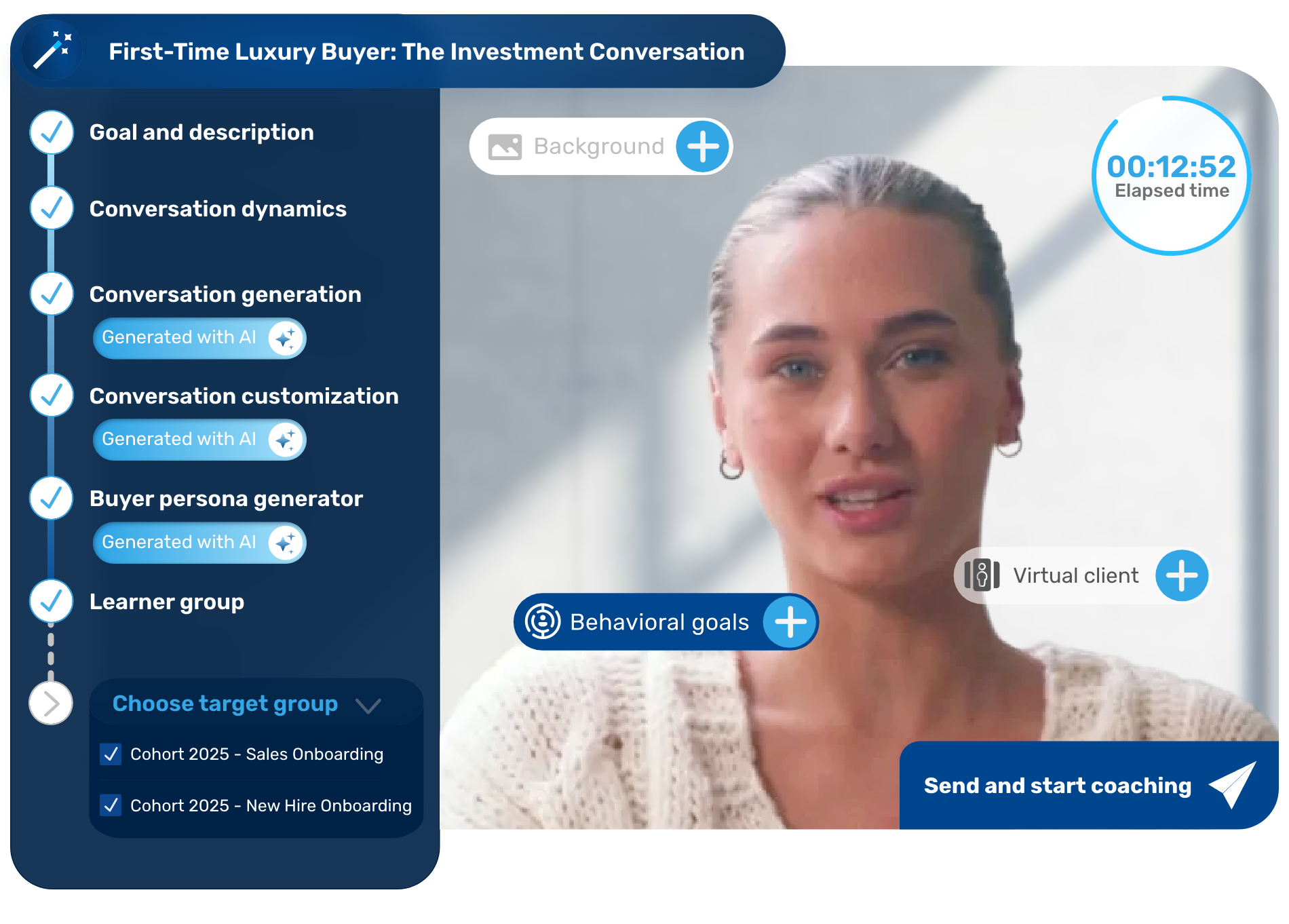
The AI coaching platforms that drive measurable methodology adoption do not train Sandler as a full 7-step curriculum at once. They identify the one or two behaviors where the team's current performance diverges most from the framework, build deliberate practice scenarios for those specific behaviors, and measure behavioral change before moving to the next step.
Conclusion
The Sandler Selling Method is not complicated. It is hard. The Up-Front Contract takes 60 seconds. The Pain Funnel has six questions. The Post-Sell conversation follows a predictable pattern. What makes Sandler difficult is the behavioral discipline required to execute each step under pressure, when the prospect is evasive, when the budget conversation gets uncomfortable, or when the verbal yes tempts the rep to stop working.
The reason most Sandler rollouts underperform is not the framework. It is that the coaching program treats Sandler as knowledge to be transferred rather than behavior to be built. Knowledge transfer is a workshop. AI coaching is deliberate practice, repeated in context, with specific feedback on specific signals, until the habit is automatic.
The teams that see quota uplift from Sandler are the ones who identified the two or three steps where their reps break down, built scenario practice around those exact behaviors, and measured improvement over six weeks rather than two days.
Build Sandler Habits That Survive Live Calls
Practice the Pain step, the Up-Front Contract, and the Post-Sell with AI coaching scenarios that score your behavioral signals in real time, not just your words.
Start coaching Sandler for freeFrequently Asked Questions
What is the Sandler Selling Method?
The Sandler Selling Method is a 7-step consultative sales framework developed by David Sandler in 1967. Its core principle is that the rep qualifies the prospect out rather than persuading them in. The framework includes Bonding, the Up-Front Contract, Pain discovery, Budget qualification, Decision process mapping, Fulfillment, and Post-Sell. It is grounded in transactional analysis, a psychological model that trains reps to maintain Adult-state communication even when prospects are resistant or dismissive.
What is the Pain step in Sandler selling?
The Pain step is step 3 of the Sandler system. The rep uses a sequence of progressively deeper questions, called the Pain Funnel, to move the prospect from describing a surface problem to articulating its emotional and financial cost. The step requires the rep to hold silence after each question, which most reps fail to do because they are trained to fill silence with product information. The Pain step is the behavior that most differentiates Sandler-trained reps from conventionally trained ones.
How is Sandler different from BANT and MEDDIC?
Sandler is a full behavioral system that governs the entire conversation posture from opening to close. BANT and MEDDIC are qualification frameworks: they tell you what to verify about a deal but not how to conduct the conversation. Sandler's behavioral posture (the qualification-out mindset, the Up-Front Contract, the Pain Funnel) is most useful in consultative, high-consideration sales. MEDDIC's decision-process mapping is most useful for complex enterprise deals with long sales cycles and multiple stakeholders. Most high-performing enterprise reps use elements of all three rather than choosing one.
Why does Sandler training often fail to produce results?
The most common reason is that Sandler is treated as knowledge to be transferred rather than behavior to be built. A rep can understand all 7 steps and still default to feature-pitching in a live call because the behavioral habit of holding silence in the Pain step, or setting a confident Up-Front Contract with a senior buyer, has not been practiced enough to become automatic. AI coaching requires deliberate scenario practice at the specific failure modes, with feedback on specific behavioral signals, repeated over weeks, not hours.
Can Sandler selling be coached with AI?
Yes. AI coaching platforms can simulate the specific scenarios that build Sandler behavioral habits, including a CFO who deflects the budget conversation, a prospect who gives a surface pain answer and goes quiet, or a buyer who wavers after a verbal yes. The advantage of AI coaching over role-play with managers is that it scores behavioral signals (not just question choices), provides immediate feedback, and allows high repetition volume that is not possible with live coaching alone. Retorio customers who coach Sandler behaviors at scale report a +14.6% increase in quota achievement across enterprise deployments.
What is the Up-Front Contract in the Sandler method?
The Up-Front Contract is a mutual agreement set at the beginning of every Sandler conversation. The rep explicitly names what will happen during the meeting, what will not happen (no pressure, no unexpected asks), and what the outcome at the end will be, typically that both parties will make a clear decision to advance or not advance. Its purpose is to eliminate the ambiguity that causes deals to end without a defined next step. It takes about 60 seconds to deliver and takes most reps three to four weeks of practice to deliver with the confidence that makes it effective.
Written with help from LLMs, edited and checked by Önder Mutluer, Website Manager and Marketing Strategist, and Dr. Patrick Oehler, Co-founder and Co-CEO. Reviewed by Peter Holdenried, Head of Sales. How this article was researched, written and checked, and who reviews which topic: Retorio editorial policy.